CMwww.chaptermuse.com › Help › Modes
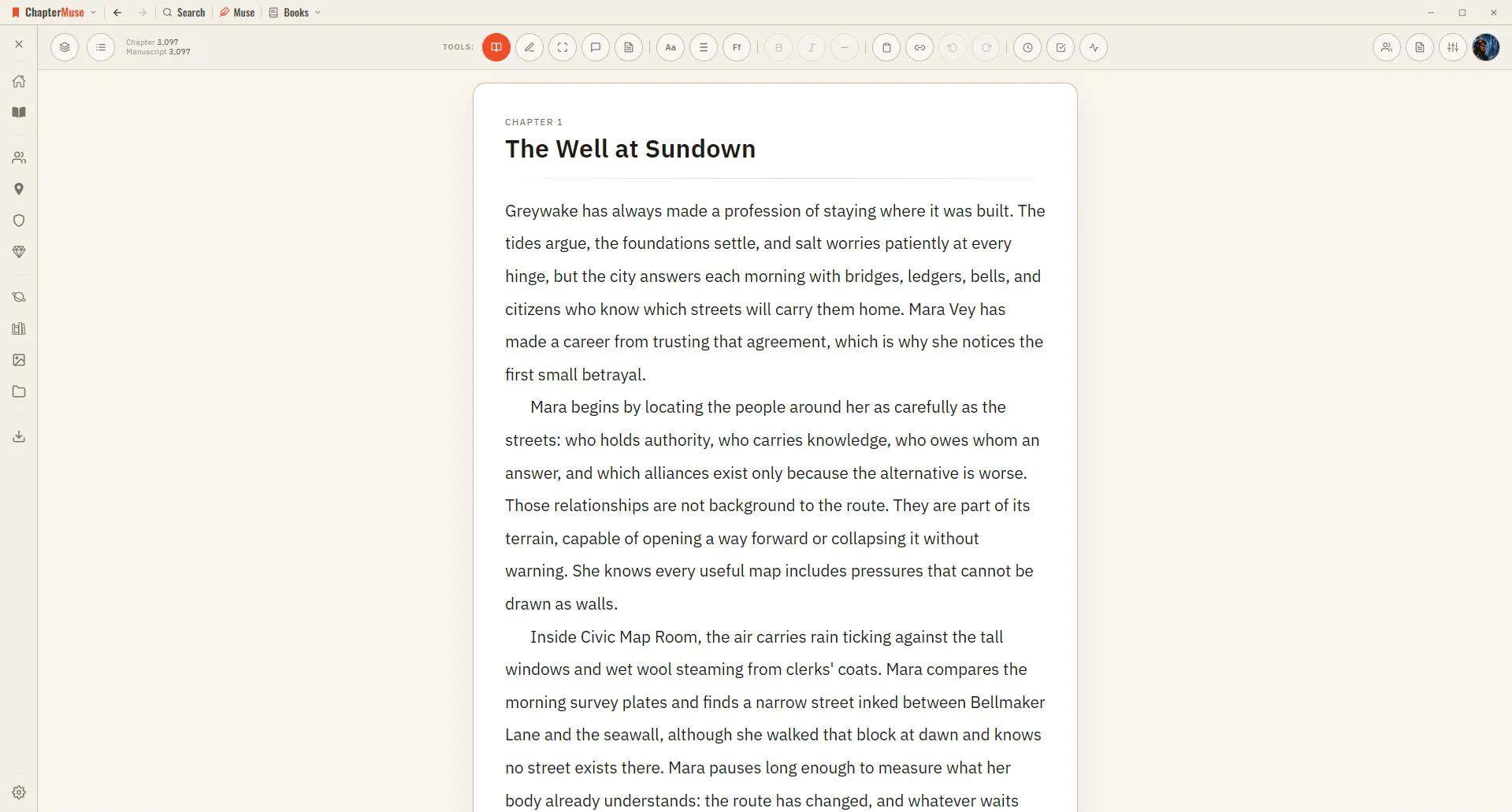
Switch Between Read and Edit Modes
Switch between focused writing and distraction-free reading with one click.
About 123 results (0.061 seconds)
CMwww.chaptermuse.com › Help › Modes
Switch between focused writing and distraction-free reading with one click.
CMwww.chaptermuse.com › Guide › Plan a scene
They're the ones your eye slides off. What the aftermath beat is actually for is proof of cost.
CMwww.chaptermuse.com › Guide › Plot grid vs timeline vs mind map
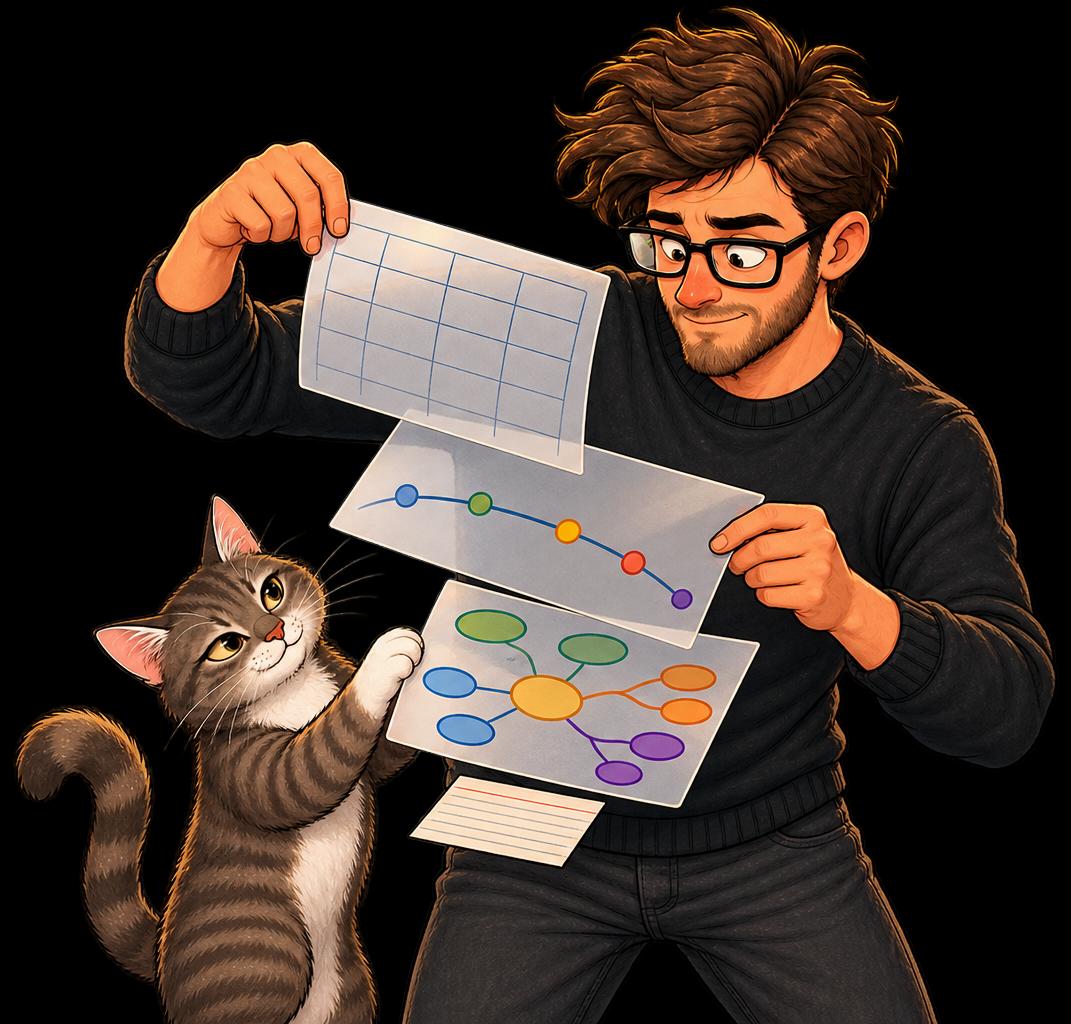
Any novel with a flashback, a withheld revelation, a dual timeline, or two characters who meet in chapter thirty having each had a chapter one, is running both at once.
CMwww.chaptermuse.com › Help › Outliner
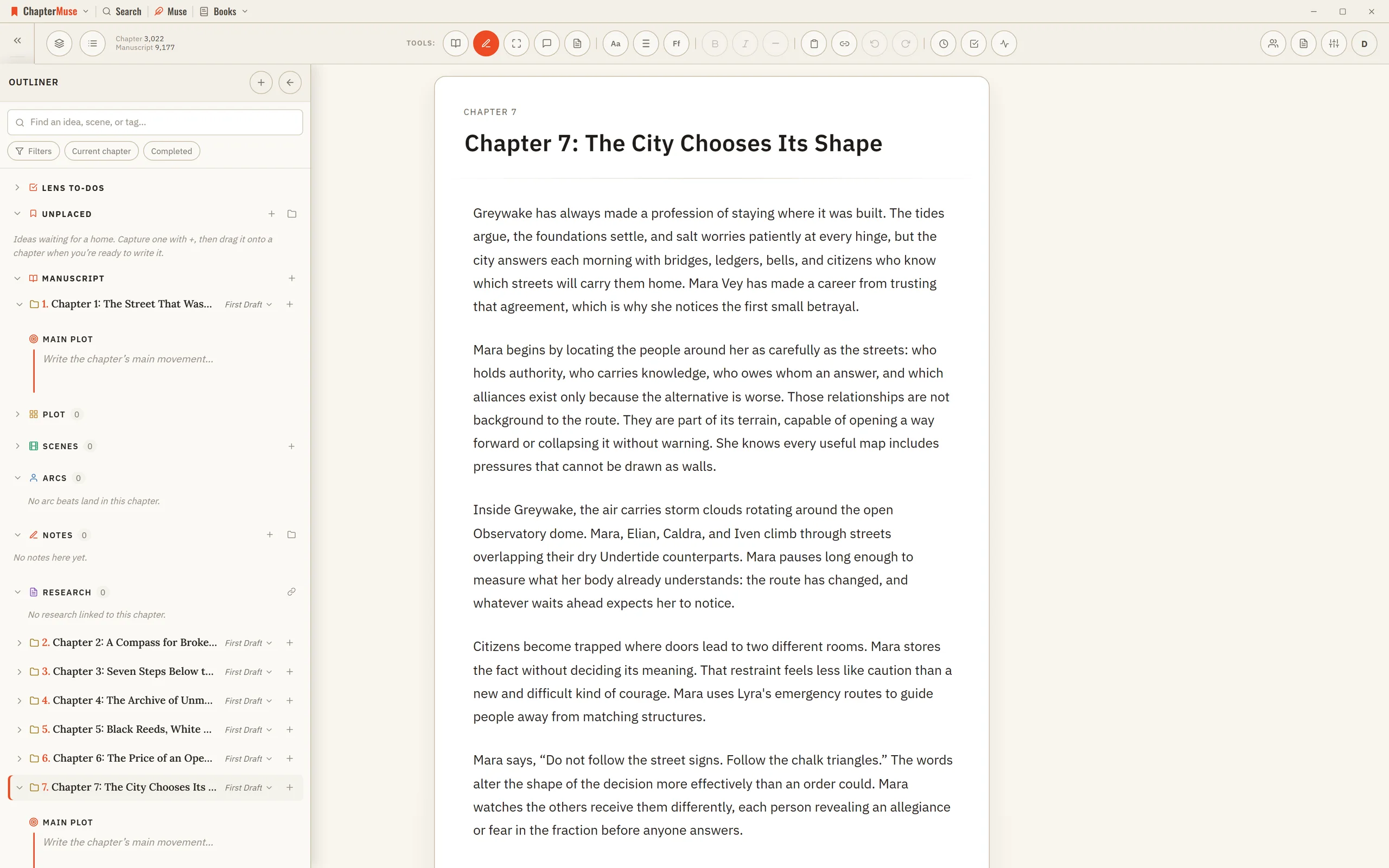
5Check the intention off when the prose has absorbed it; show or hide completed work whenever you like.
CMwww.chaptermuse.com › Guide › Format a book
Page count sets the spine width, the paper cost and eventually the price on the back, which is why an editor asking you to lose 4,000 words is sometimes making an arithmetic argument rather than an aesthetic one.
CMwww.chaptermuse.com › Genre › Romance writers
The planning tools can reflect a framework you choose, but none of them requires a structure and nothing prompts you toward one.
CMwww.chaptermuse.com › Help › Writing progress
Daily and weekly targets count new prose committed during that period Manuscript and chapter targets measure the current size of the actual text, and can carry a finish date Sprints have an inclusive start and finish date,…
CMwww.chaptermuse.com › Guide › Create a story bible
If yes, the entry is costing you maintenance and buying nothing. The entries worth keeping are the ones about facts distributed across many chapters (relative ages, elapsed time, who currently knows what) because those are…
CMwww.chaptermuse.com › Help › Muse
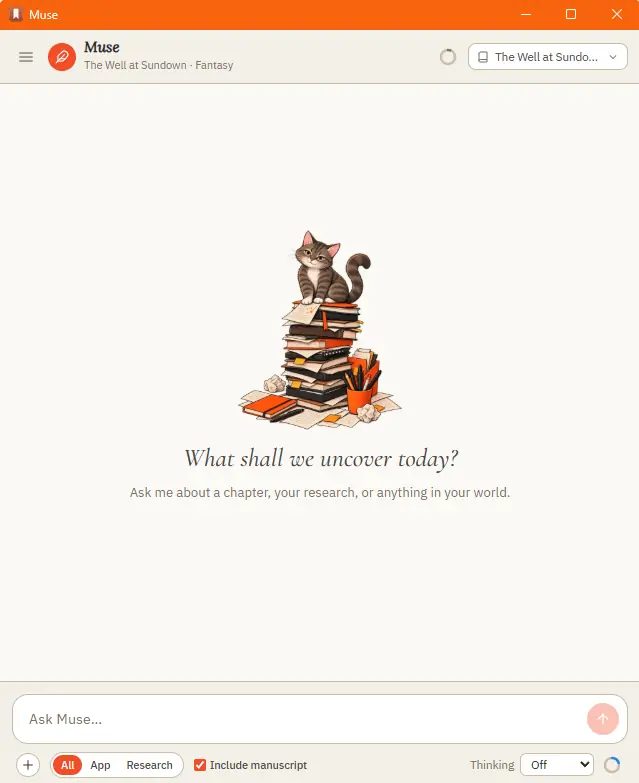
Point Muse at your manuscript and research and let it mine them: pick a focus — characters, locations, factions, items, connections, terms & lore — or scan for everything at once.
CMwww.chaptermuse.com › Help › Read aloud
Updated 4 September 2026 Reading your work aloud is one of the oldest editing tricks — your ear catches what your eye skims past.