For romance writers
Every turn between two people

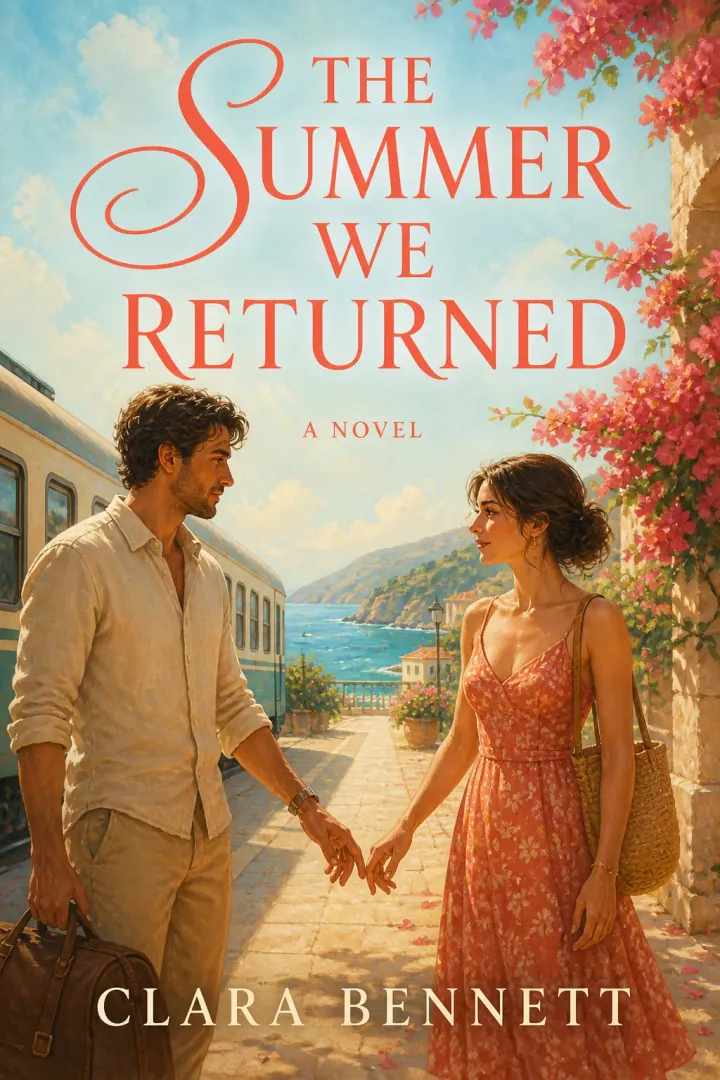
Track what each character believes, needs, hides and changes—then see how the relationship moves from scene to scene.
01 · People
Map both inner journeys.
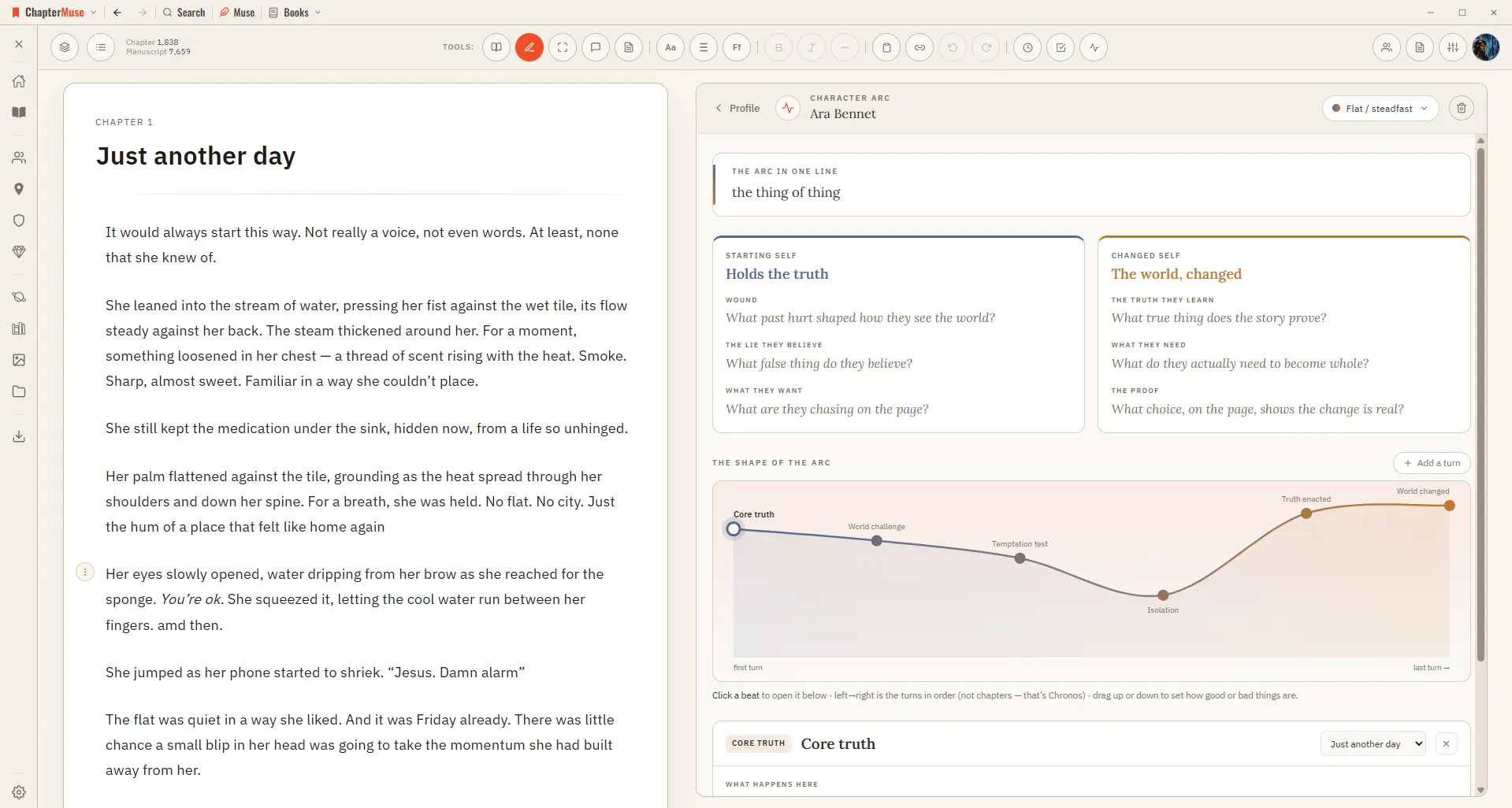
A romance has at least two arcs and they have to interfere with each other. What makes the middle of one sag is almost always that only one person is really changing: she is being worked on by the book and he is standing still, agreeing, waiting to be chosen.
Character profiles and arcs keep want, need, lie, truth and the choices that prove change separate for each of them, so you can see at a glance whether both people are carrying a genuine arc or only one is. Connections show the rest of the cast who make it harder, which is usually where a stalled middle finds its pressure.
Characters
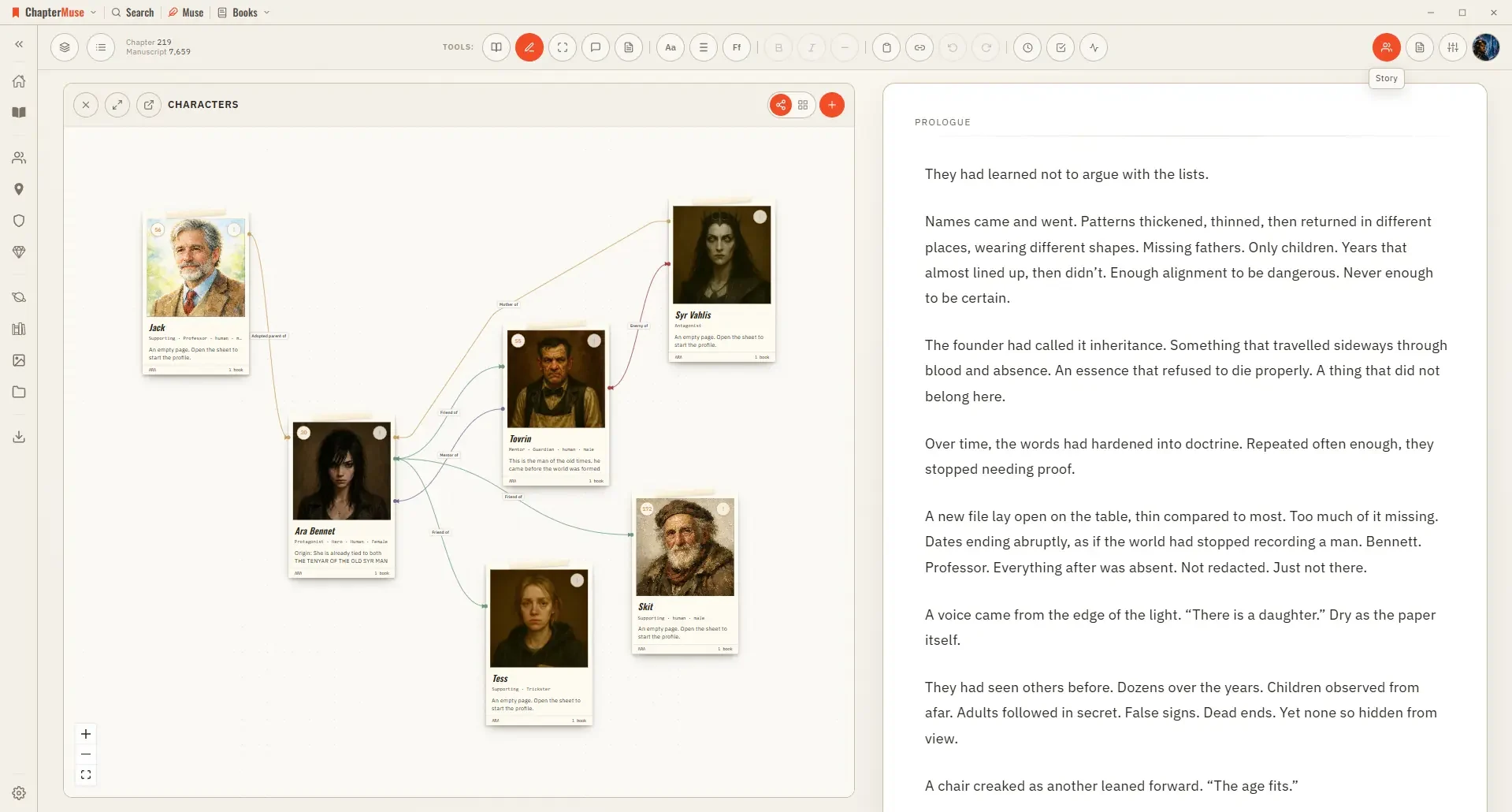
Keep identity, history, psyche, voice, relationships and arc in one living profile.
Connections
Make alliances, rivalries, debts and other relationships visible across the cast.
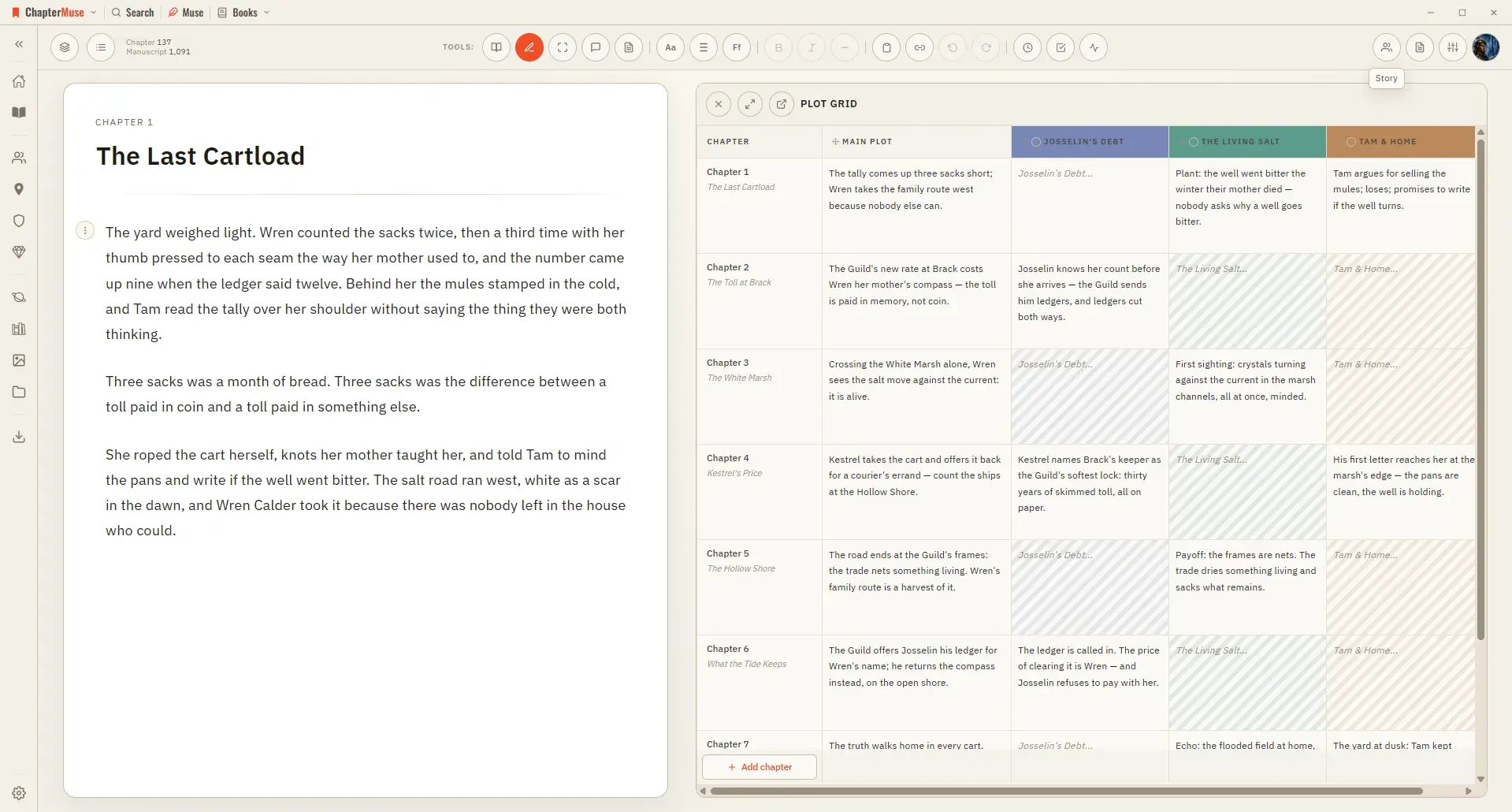
Plot Grid
Read plots and subplots across the same chapter-by-chapter view. An empty cell is a thread you dropped.
Character arc map
02 · Scenes
Make every encounter change the terms.
The scenes readers remember are the ones where something becomes impossible that was possible on the previous page. The scenes that drag are the ones where two people who want the same thing say so, pleasantly, for four pages.
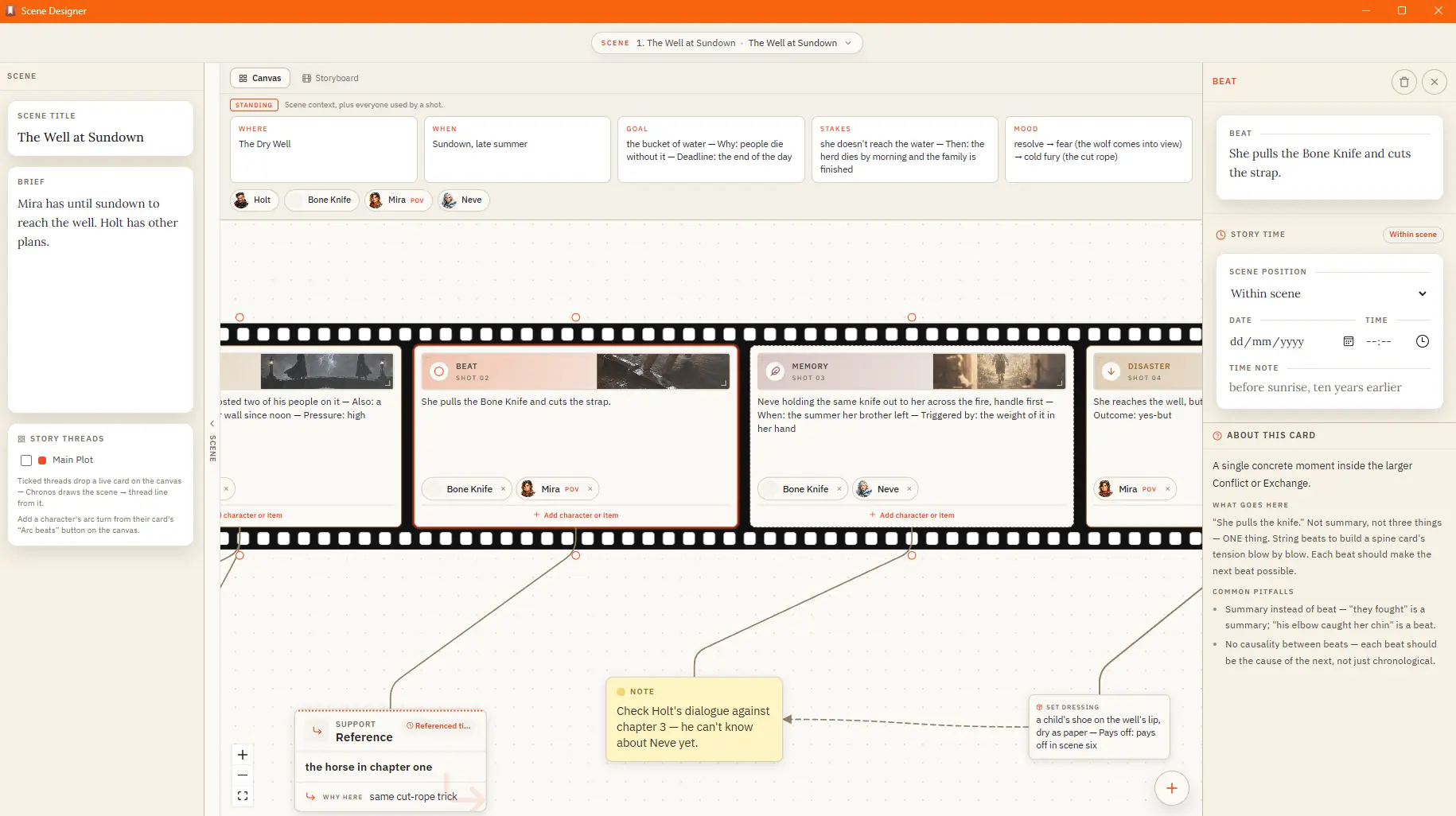
The Scene Designer keeps goal, stakes, mood and beats visible while you build the encounter, which makes it obvious when a scene is an exchange of information wearing a nice outfit. The Plot Grid tracks whose point of view carried each chapter and where the relationship actually turned, so the shape of the courtship is something you can see rather than something you hope is there.
Scene Designer
A strip of shots on a spine of Action, Sequel, Dialogue or Reveal.
Plot Grid
Read plots and subplots across the same chapter-by-chapter view. An empty cell is a thread you dropped.
Storyboard
Turn planned beats into a visual sequence you can inspect before drafting.
Scene beats
03 · Revision
Read pacing without writing by formula.
Romance attracts more structural advice than any other genre, and a great deal of it is a beat sheet with dates attached. Some writers work beautifully that way. Others find that hitting the beat on schedule is exactly what makes a book feel manufactured.
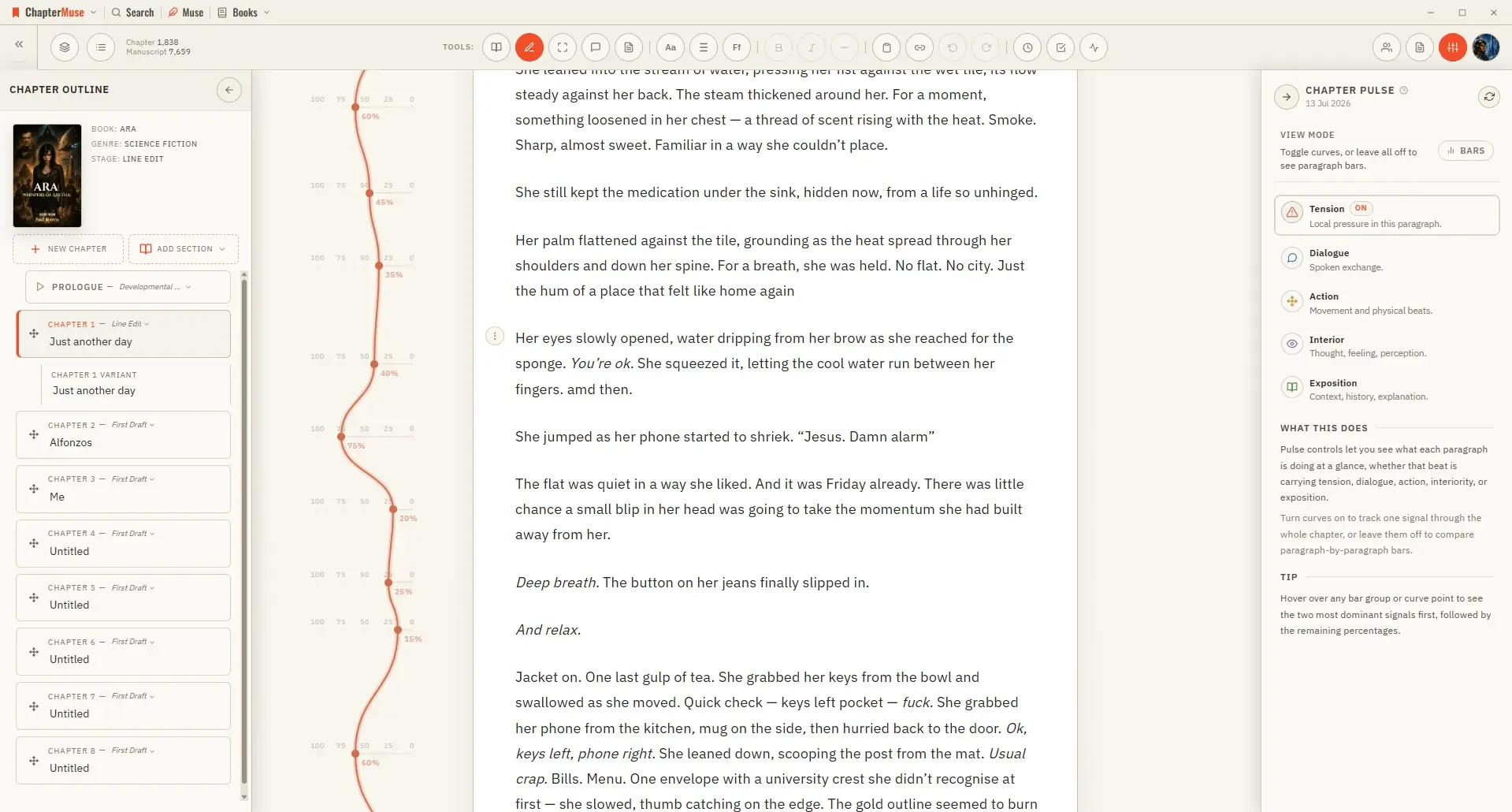
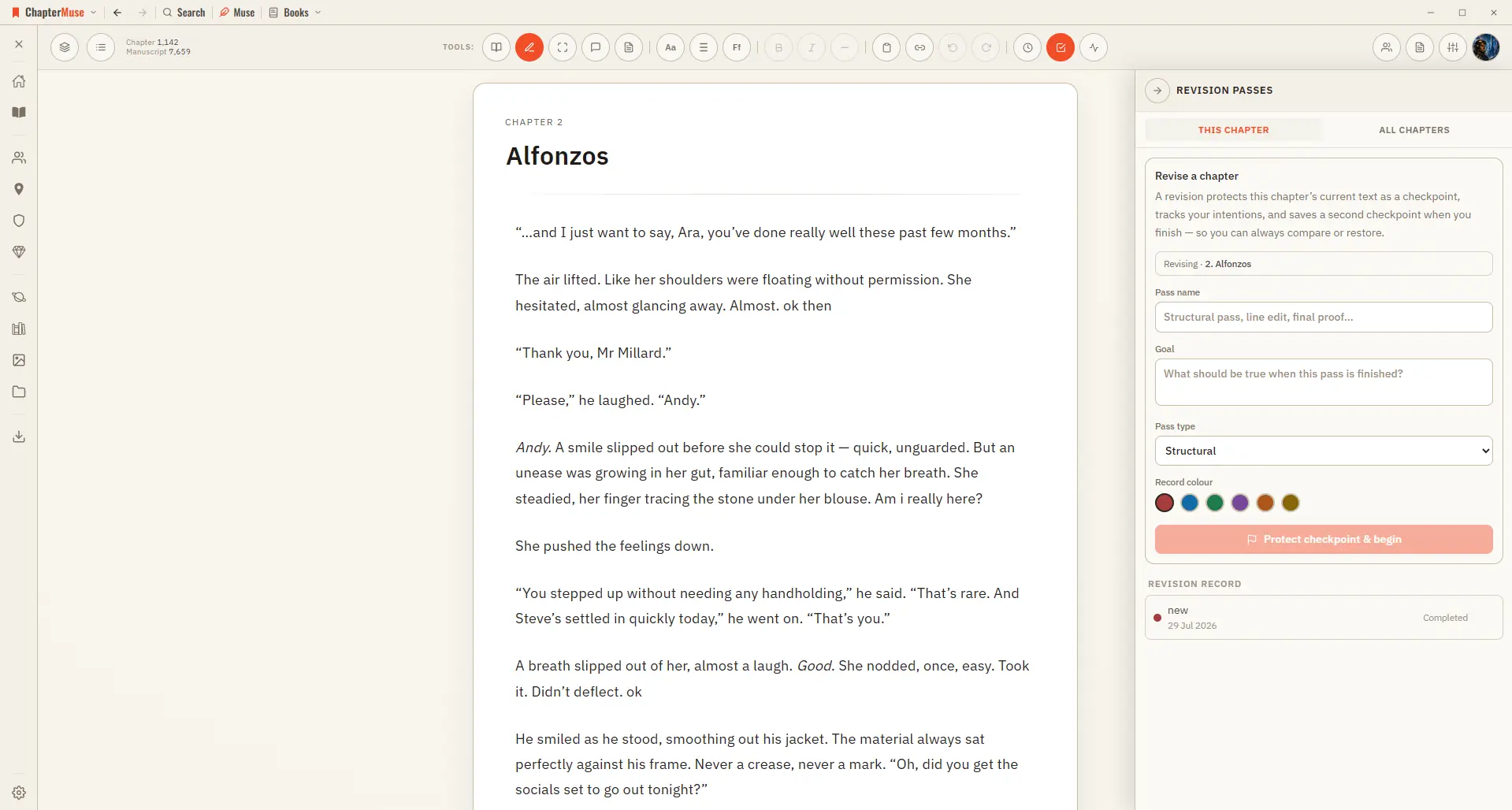
Nothing here requires a framework. Chapter Pulse, Analysis and protected revision passes give you evidence about shape, energy and where the book slows, and then stop. What the evidence means, and whether the slow chapter is a fault or the breath before the turn, stays with you. If you do write to a structure, the planning views will hold it; they will not impose one.
Narrative energy
Questions answered
01Can I try this before buying?
Yes. The 30-day trial unlocks the complete application without asking for a payment card.
02Does ChapterMuse work on Windows and macOS?
Yes. ChapterMuse is a desktop application for Windows and macOS, with the manuscript and story-world data stored on your computer.
03Does ChapterMuse impose a romance beat sheet?
No. The planning tools can reflect a framework you choose, but none of them requires a structure and nothing prompts you toward one.
04Which of these need a particular licence?
Characters, the Plot Grid and the revision tools are included from Light at £24 including UK VAT. Character Arcs, Connections, the Scene Designer and the Storyboard come with Writer at £36 including UK VAT. The trial unlocks everything.
