CMwww.chaptermuse.com › Compare › Scrivener
The Scrivener Alternative with a Story Bible
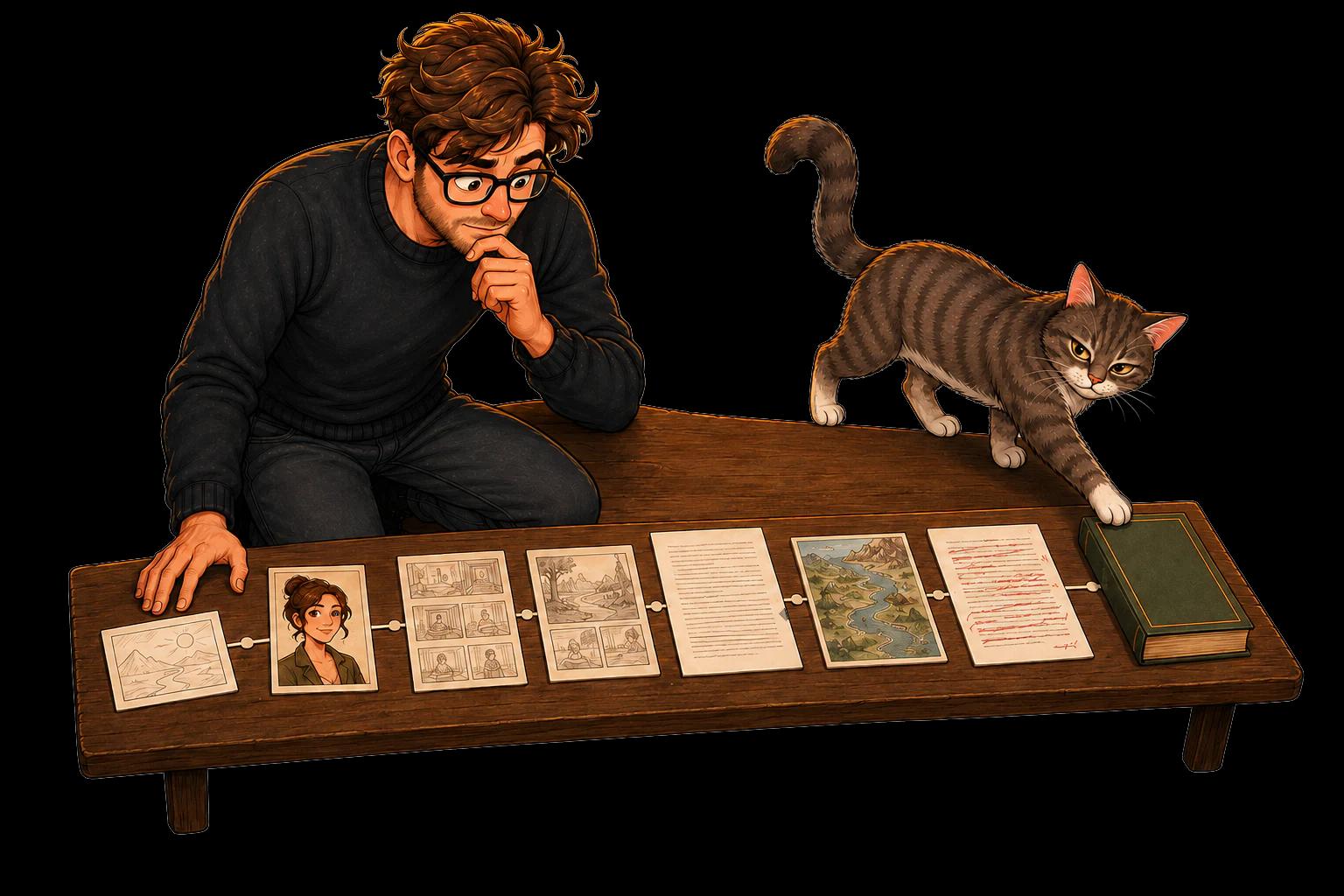
Scrivener is built around the binder: split the manuscript into pieces, move them about, and compile the result into finished files.
About 112 results (0.063 seconds)
CMwww.chaptermuse.com › Compare › Scrivener
Scrivener is built around the binder: split the manuscript into pieces, move them about, and compile the result into finished files.
CMwww.chaptermuse.com › Guide › Scrivener migration
scriv is a folder of RTF files with an index on top 03Compile decides what shape the book arrives in 04Three tiers: what travels, what photocopies, what stays 05Research is a second migration, and it is easier than the first…
CMwww.chaptermuse.com › Guide › Track character arcs
Willing, because that is the thing that actually moves: not their feelings about the world, but the set of actions available to them.
CMwww.chaptermuse.com › Guide › How to write a novel
One vivid scene teaches you the voice, the person and the turn, and momentum survives on visible progress. Do I need special software to write a novel?
CMwww.chaptermuse.com › Feature
Muse answers from your manuscript, research and story world, links every grounded claim back to its source, and leaves every word of the novel to you.
CMwww.chaptermuse.com › Guide › Local first writing software
Web apps added to the home screen keep their own counter and are not the intended target, but intent is not a guarantee, and a writing tool you use in a tab, on holiday, for a fortnight, is squarely inside the rule.
CMwww.chaptermuse.com › Help › Revisions
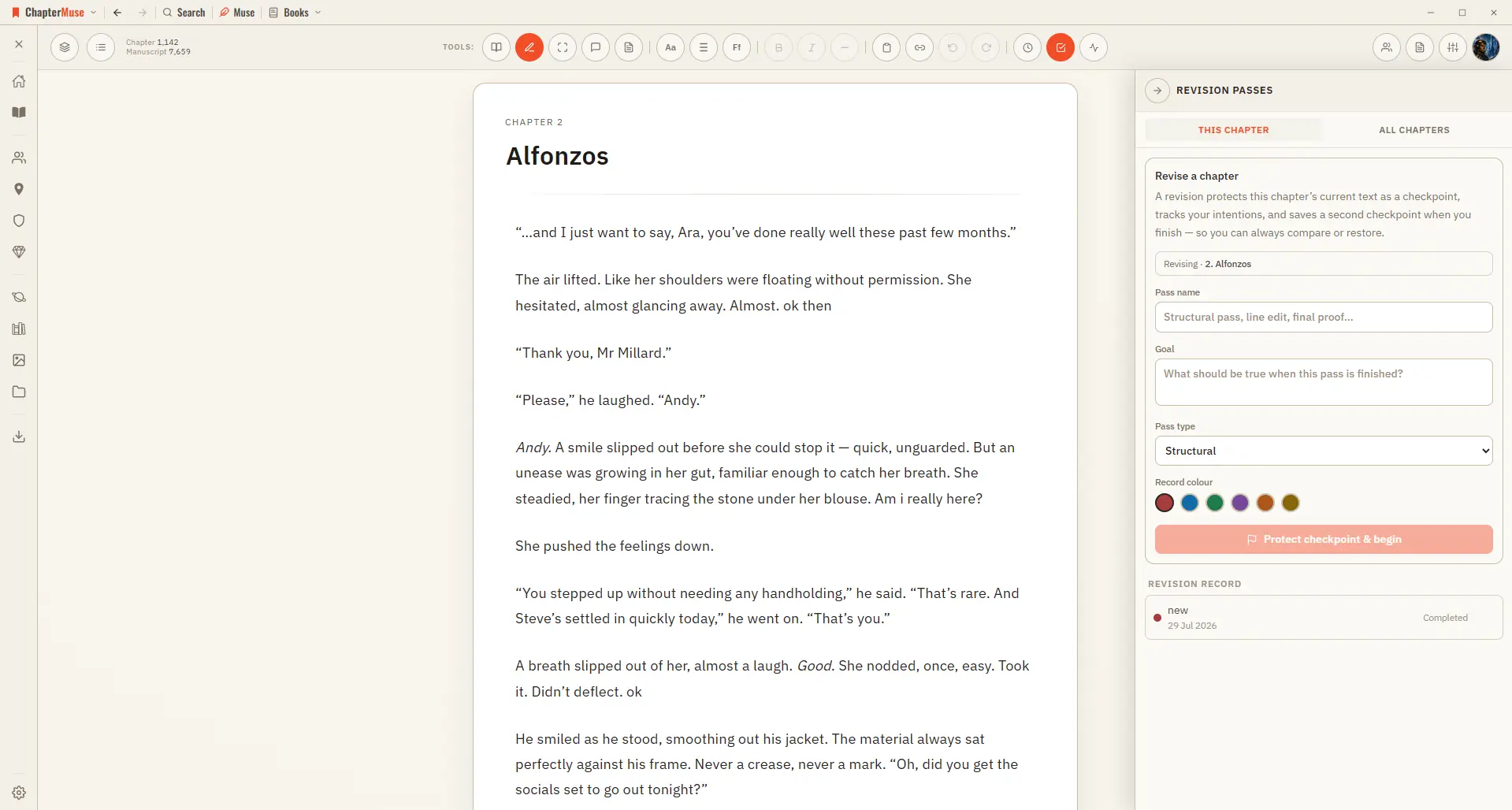
Checkpoint comparison shows words inserted and removed plus changed, added, deleted, and moved paragraphs Normal self-revision changes the manuscript immediately; the comparison remains a view, never formatting stored in the prose
CMwww.chaptermuse.com › Guide › Format a book
5 spacing and explicitly refuses PDFs, and another has you paste the first 10,000 words into a web form. What is a reflowable ebook?
CMwww.chaptermuse.com › Guide › Plan a scene
It's Dwight Swain's 1965 model: a scene (goal, conflict, disaster) followed by a sequel (reaction, dilemma, decision) that produces the next goal.
CMwww.chaptermuse.com › Guide › Novel november
67, so 1,667 words a day is the usual rounded target. If you reserve four days off, 26 writing days require about 1,924 words each.