For mystery and thriller writers
Keep every clue accounted for

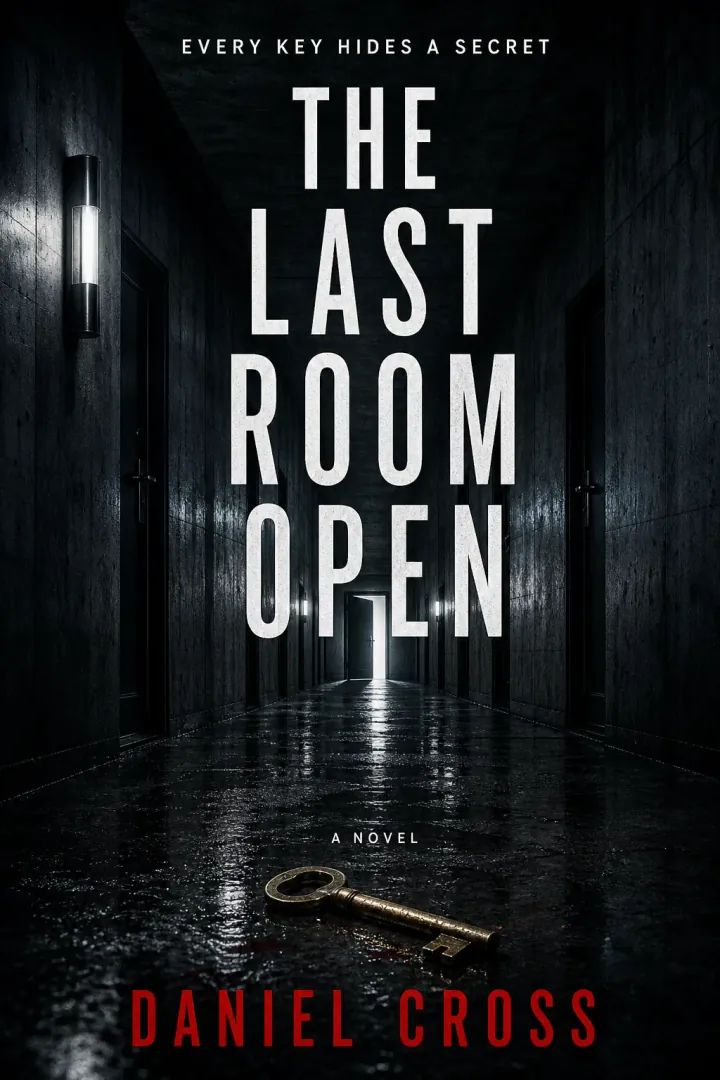
Separate what happened from what the reader knows, trace evidence through the cast, and find the first place every clue entered the manuscript.
01 · Clues
Track evidence, revelation and payoff.
A mystery is a promise ledger. Every clue you plant is a debt, and the reader keeps the accounts more carefully than you do. The failure is rarely a clue that contradicts itself; it is the clue that was planted with great care in chapter six and then never paid off, or the one that pays off having never actually been planted.
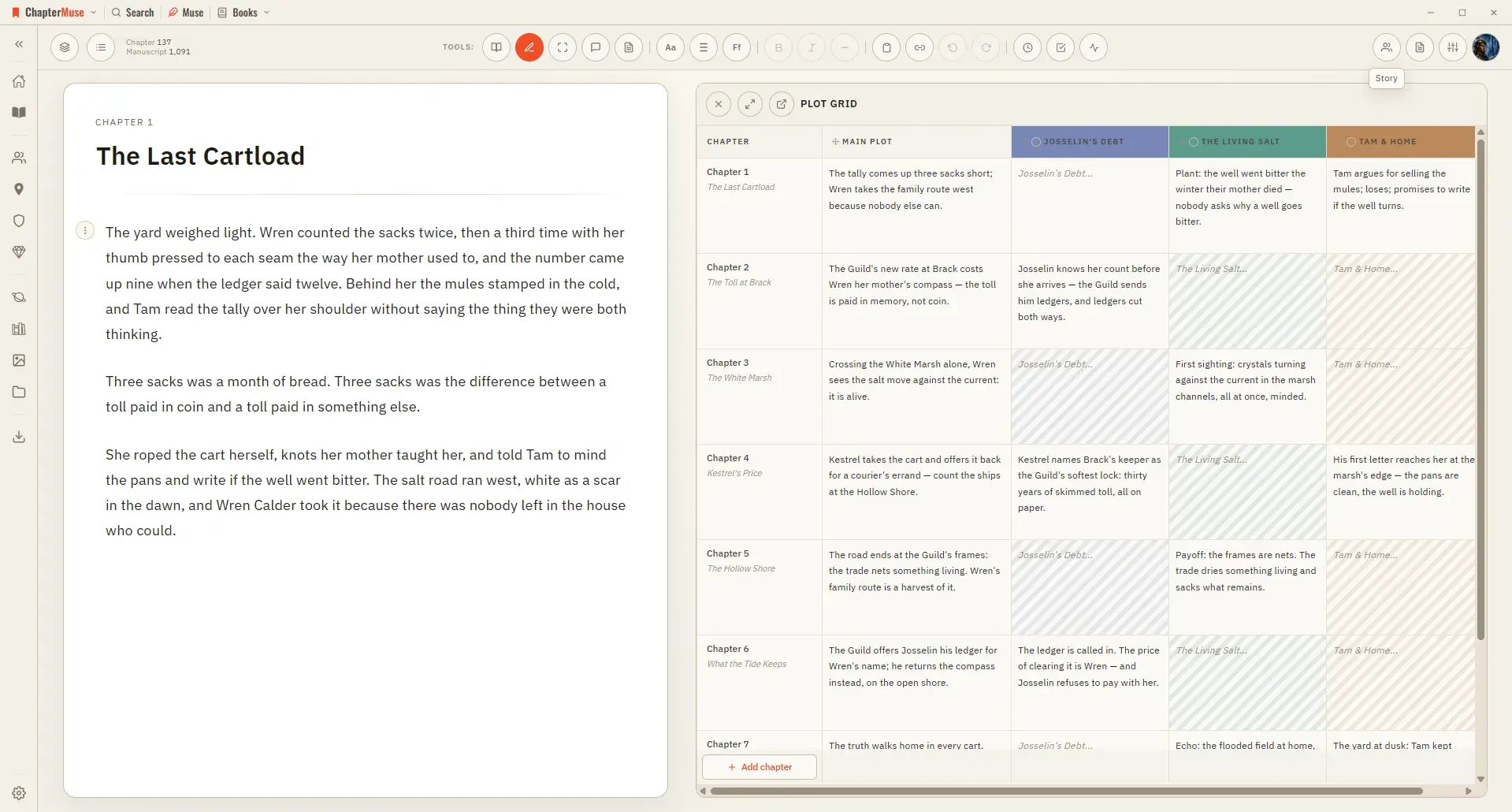
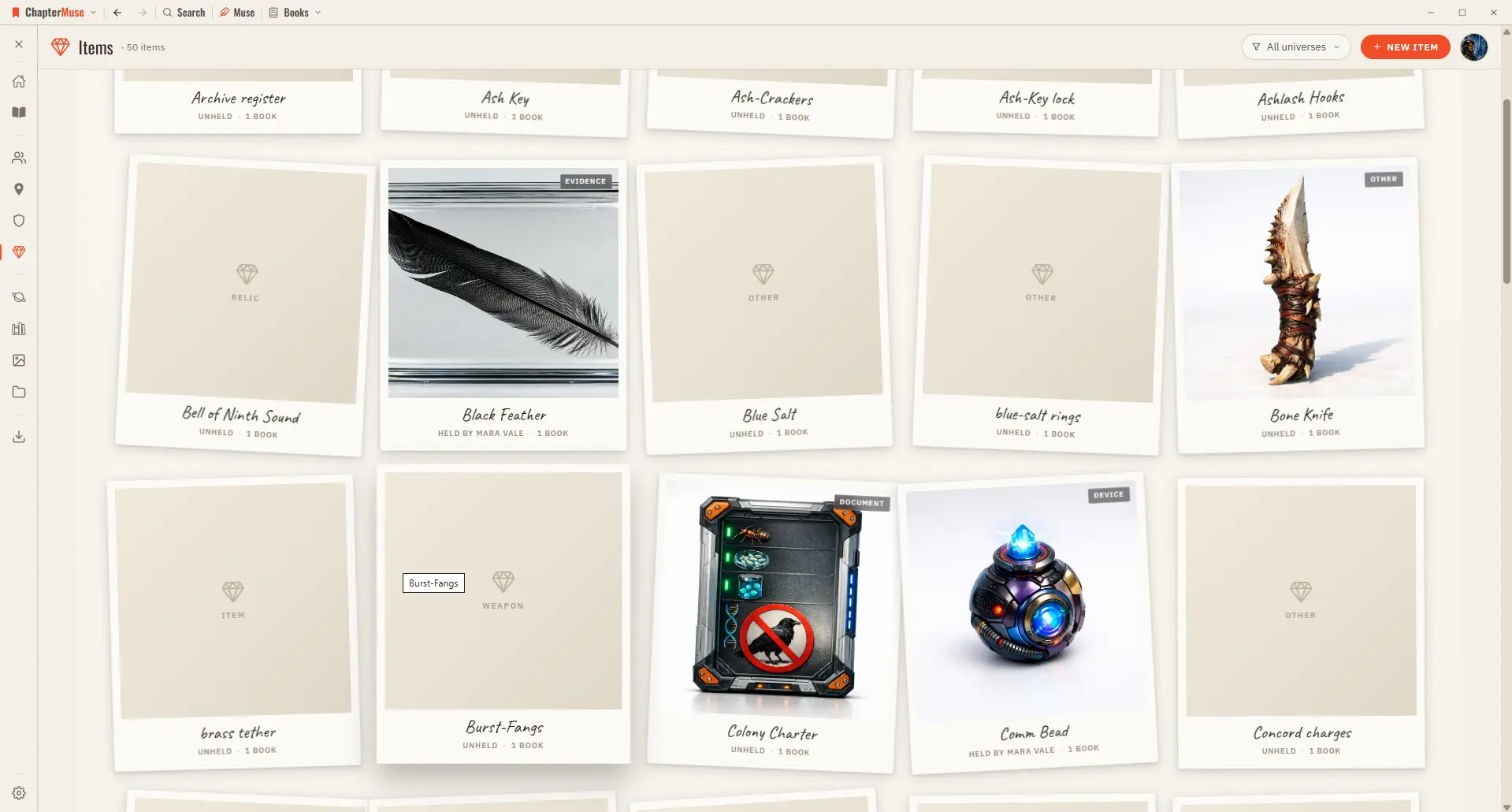
A Plot Grid gives each clue, suspect and red herring its own thread across the chapters, so the debts are visible as a shape. Items can stand for the physical evidence and record who is holding it, which is how you catch the knife that is in the evidence locker in chapter twelve and in a coat pocket in chapter fifteen.
Plot Grid
Read plots and subplots across the same chapter-by-chapter view. An empty cell is a thread you dropped.
Items
Record what an object is, who holds it and where it matters.
Characters
Keep identity, history, psyche, voice, relationships and arc in one living profile.
Connections
Make alliances, rivalries, debts and other relationships visible across the cast.
Clues across chapters
02 · Time
Know what happened before deciding when to reveal it.
In a crime novel the true sequence and the told sequence are almost never the same, and the gap between them is the book. You cannot withhold something on purpose unless you know exactly when it happened, which is why so many mysteries come apart at the alibi rather than at the motive.
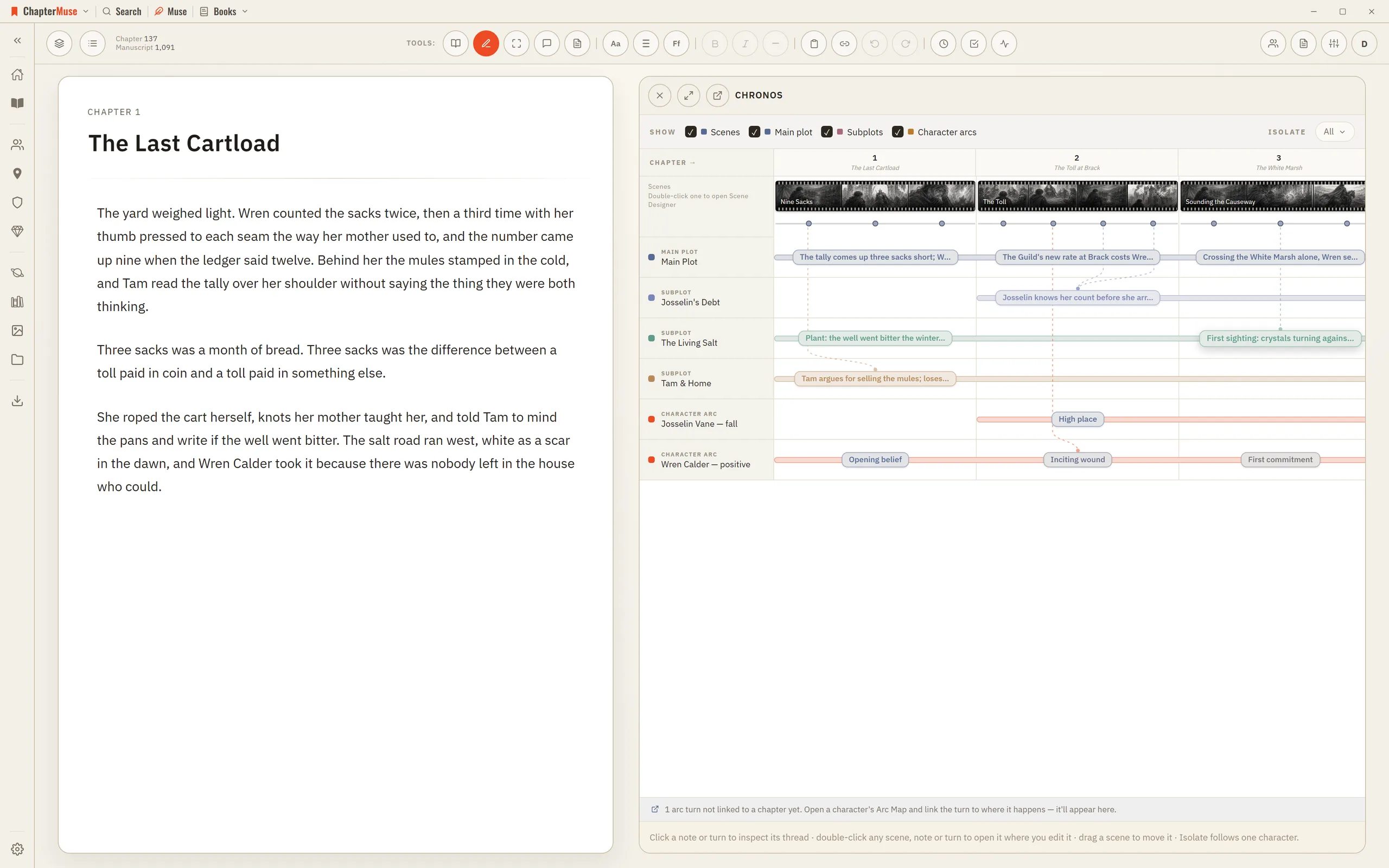
Chronos records the underlying order of events while the manuscript preserves the order the reader meets them. Holding both means you can test an alibi against the clock rather than against your memory of what you intended, and you can see the reveal you have accidentally made impossible by moving a chapter.
Chronos
Chapters across the top, as wide as their scenes, with plot threads and character arcs running underneath.
Outliner
Arrange chapters and variants while keeping intentions and summaries beside the draft.
Underlying chronology
03 · Recall
Find where the book first made the promise.
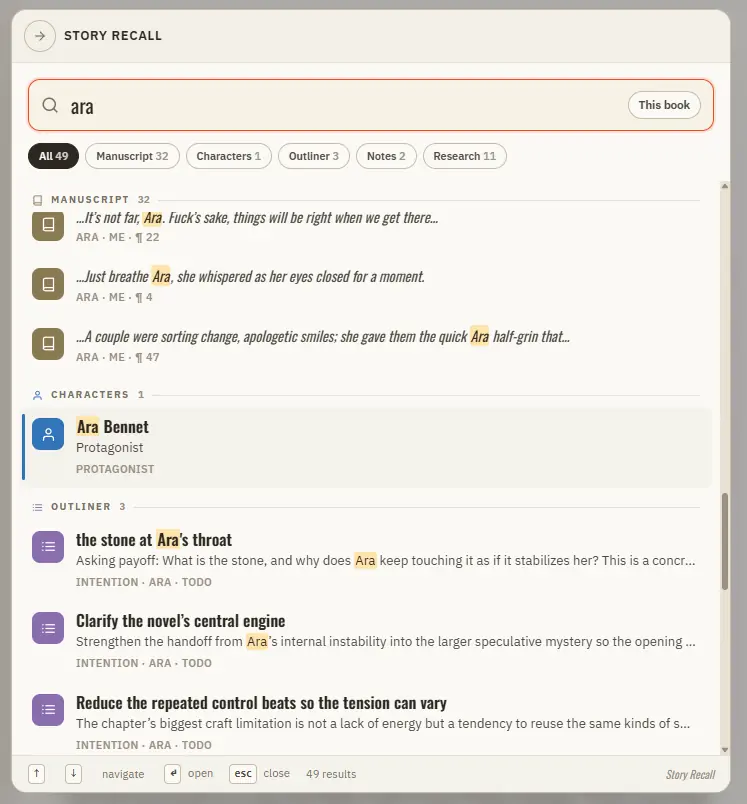
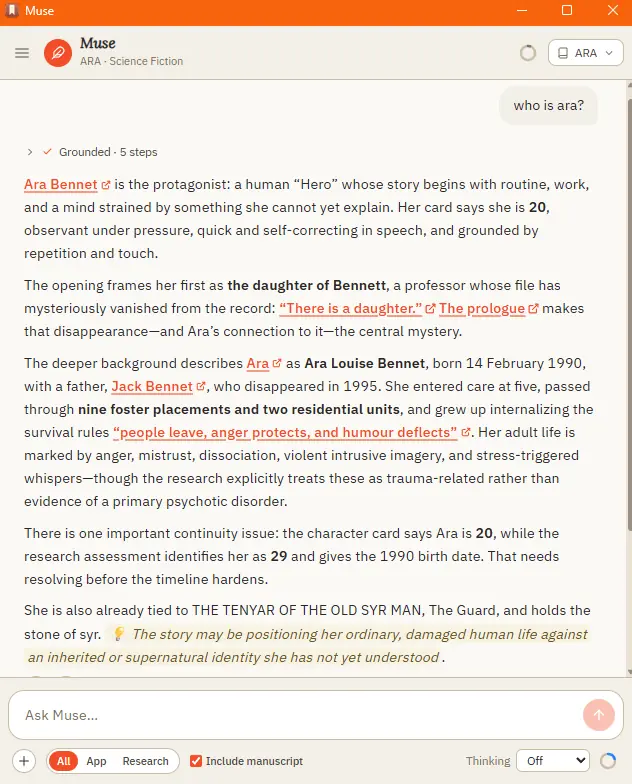
The most expensive question in a mystery draft is "where did I first mention this". Not because it is hard to answer, but because answering it badly costs you an afternoon of scrolling and you often give up and guess.
Search and Recall covers the prose, the cast, the scenes, the notes and the research in one pass. Muse can answer the same continuity question and link back to the passage it read, which turns "I think I set this up somewhere" into a paragraph you can look at and either keep or cut.
Search every project surface
04 · Pace
See the stretch where urgency went flat.
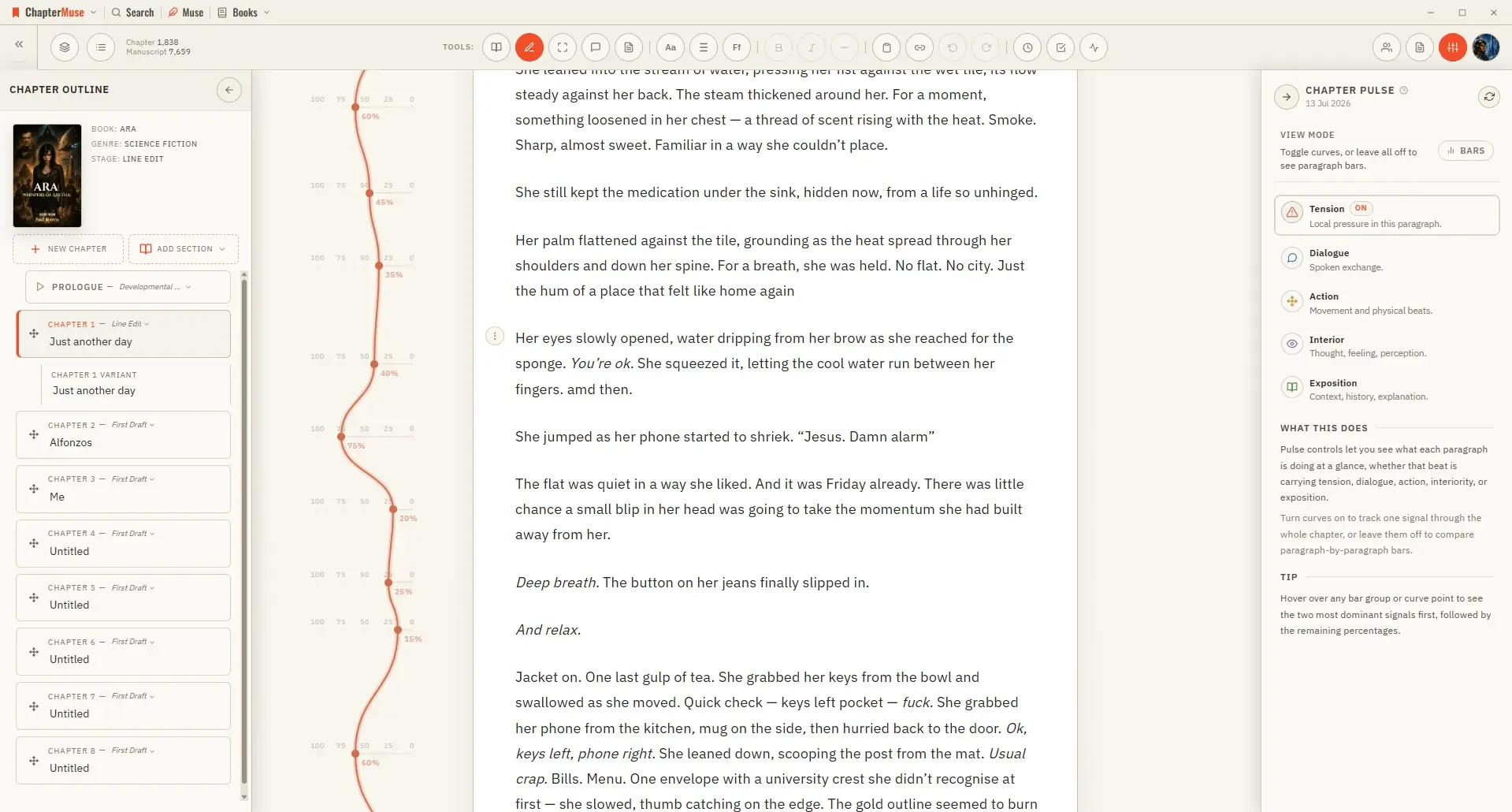
Thrillers fail in a particular way. Each individual chapter reads well, the prose is tight, and somewhere around the middle the book stops feeling urgent without any one scene being at fault. That is invisible on a reread precisely because rereading is sequential.
Chapter Pulse and Analysis show the shape across chapters rather than within them, which is where the flat stretch actually lives. They are evidence, not a verdict: a quiet run of chapters before the last act may be exactly right, and no measurement can tell you which of those you have written.
Thriller pacing curve
Questions answered
01Can I try this before buying?
Yes. The 30-day trial unlocks the complete application without asking for a payment card.
02Does ChapterMuse work on Windows and macOS?
Yes. ChapterMuse is a desktop application for Windows and macOS, with the manuscript and story-world data stored on your computer.
03Can I separate story chronology from chapter order?
Yes. Chronos tracks story time while the manuscript and Plot Grid preserve the order the reader meets events.
04Which of these need a particular licence?
The Plot Grid, items, characters, search and the analysis tools are included from Light at £24 including UK VAT. Chronos and Connections come with Writer at £36 including UK VAT. The trial unlocks everything.
