For historical-fiction writers
Research you can talk to
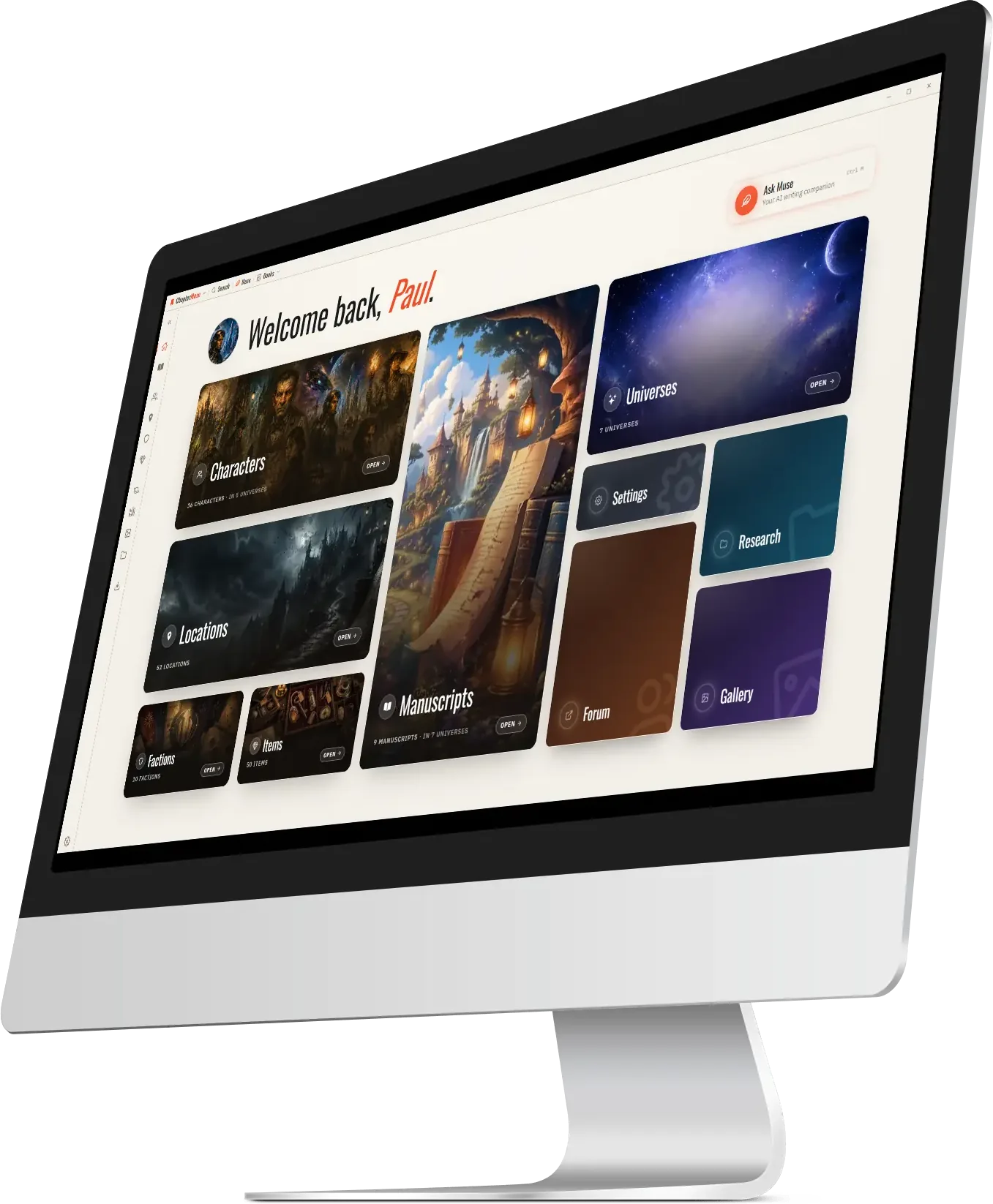
Open the source beside the chapter, connect it to people and places, and distinguish the historical record from the invention built around it.
01 · Research
Keep the source beside the sentence it informs.
Historical fiction is written in two modes that fight each other. One is the archive: slow, careful, full of things you must not get wrong. The other is the draft, which needs momentum. Every time the second has to stop and go looking for the first, you lose the afternoon.
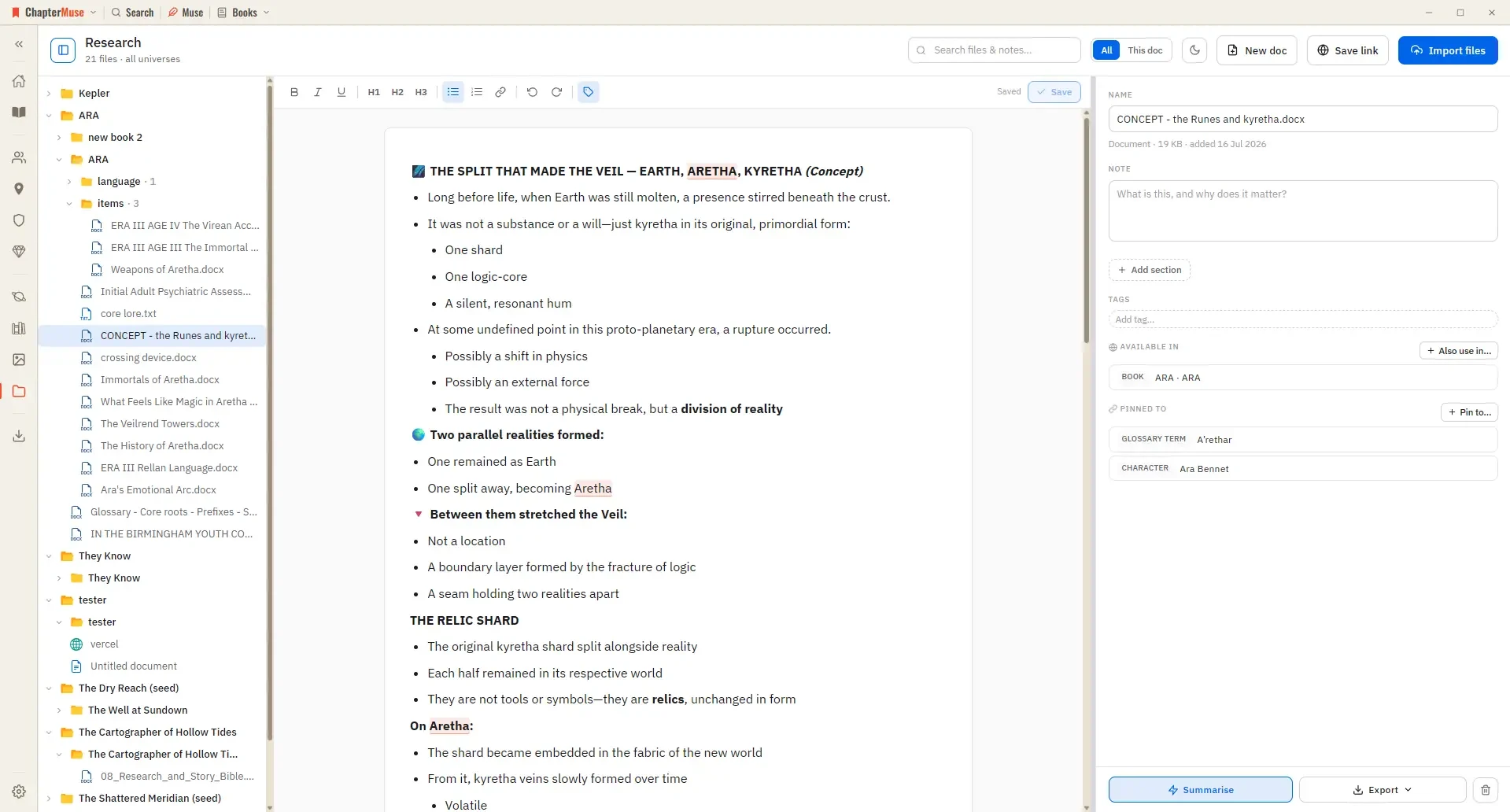
The Research Center takes documents, PDFs, spreadsheets, images, audio and links, and the workspace views open a source beside the chapter it belongs to rather than in another application behind the one you are writing in. It is a small thing that changes the working day: the photograph of the street is next to the paragraph about the street.
Locations
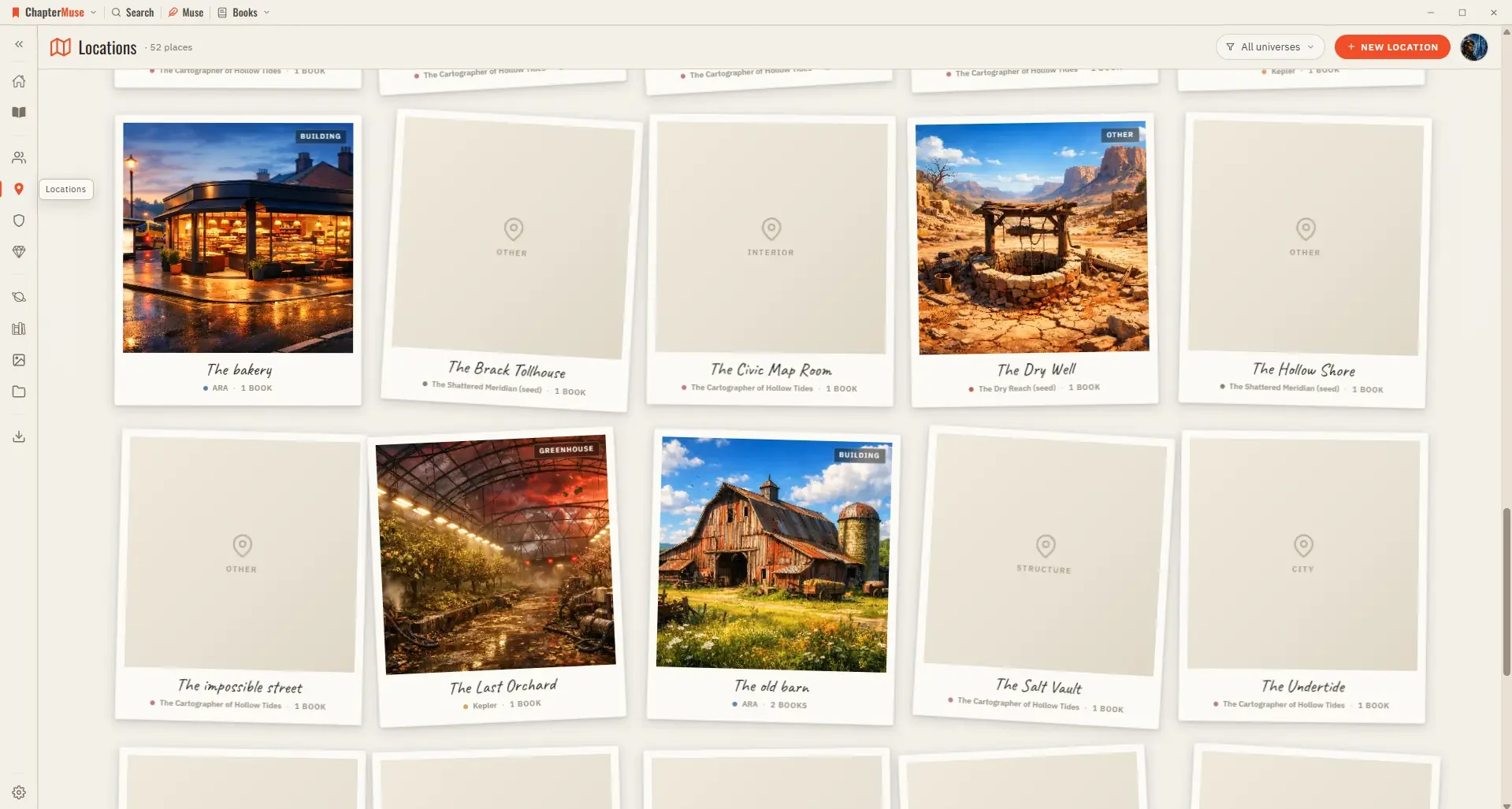
Collect place details, images and the scenes that happen there.
Characters
Keep identity, history, psyche, voice, relationships and arc in one living profile.
Factions
Track membership, purpose, power and visual identity without losing context.
Lore and glossary
Keep established terms and world rules consistent wherever they appear.
Research binder
02 · Chronology
Keep historical time and narrative time distinct.
Two clocks run through a historical novel. One belongs to the period and is not negotiable: the harvest, the crossing, the battle, the date the letter could plausibly have arrived. The other belongs to the book, which may open in 1834 and spend three chapters in 1811.
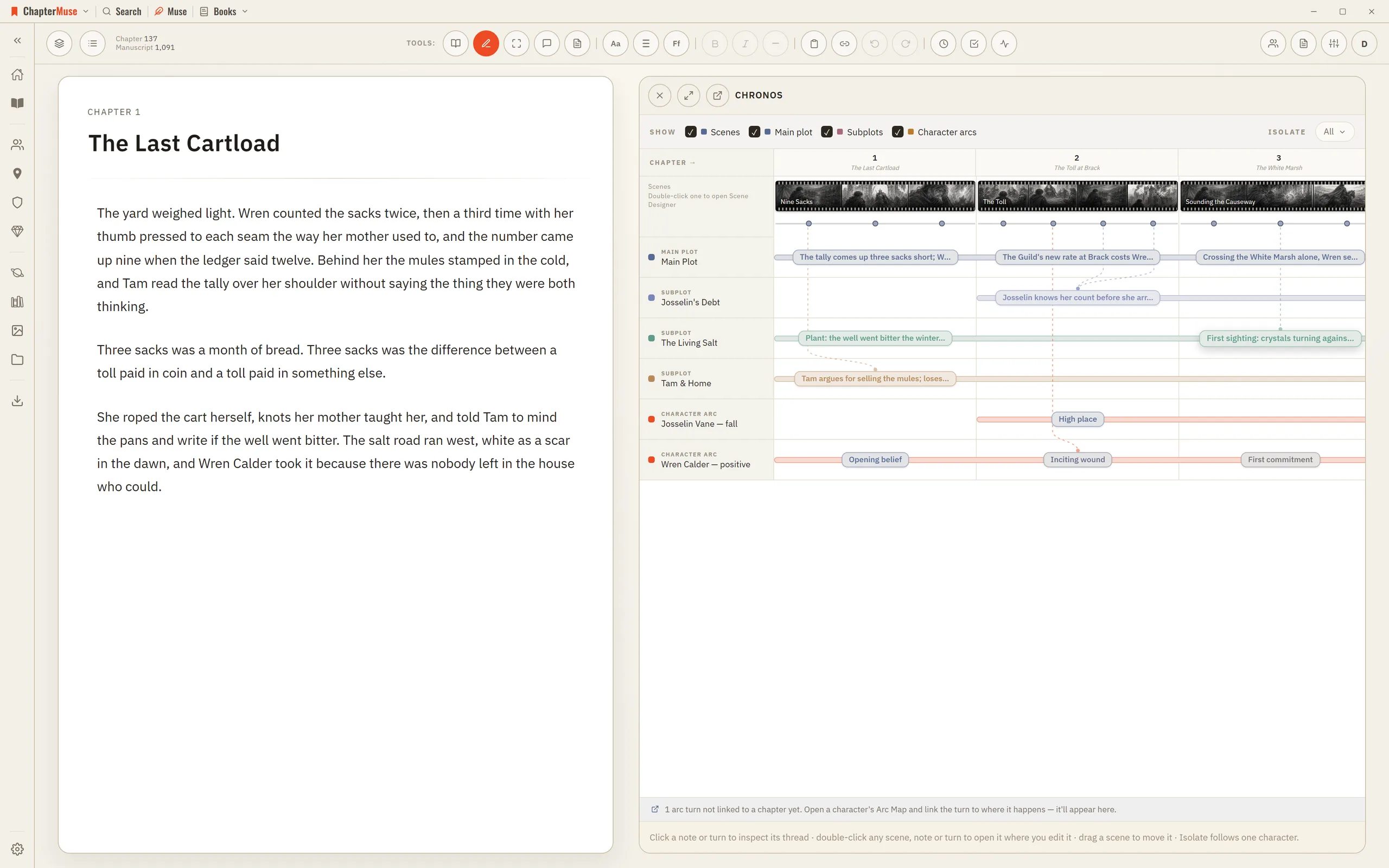
Chronos maps events against real dates while the chapters stay free to reveal them in whatever order the novel needs. Holding both is what lets you check a journey against the calendar instead of against instinct, and it is where the errors that reviewers enjoy finding tend to hide.
Chronos
Chapters across the top, as wide as their scenes, with plot threads and character arcs running underneath.
Outliner
Arrange chapters and variants while keeping intentions and summaries beside the draft.
Plot Grid
Read plots and subplots across the same chapter-by-chapter view. An empty cell is a thread you dropped.
Historical chronology
03 · People and places
Carry context through the whole manuscript.
The research problem that grows worst with length is not finding things. It is that the same context gets re-established in every chapter that needs it, in slightly different words, until the novel contains three incompatible accounts of how the household was organised.
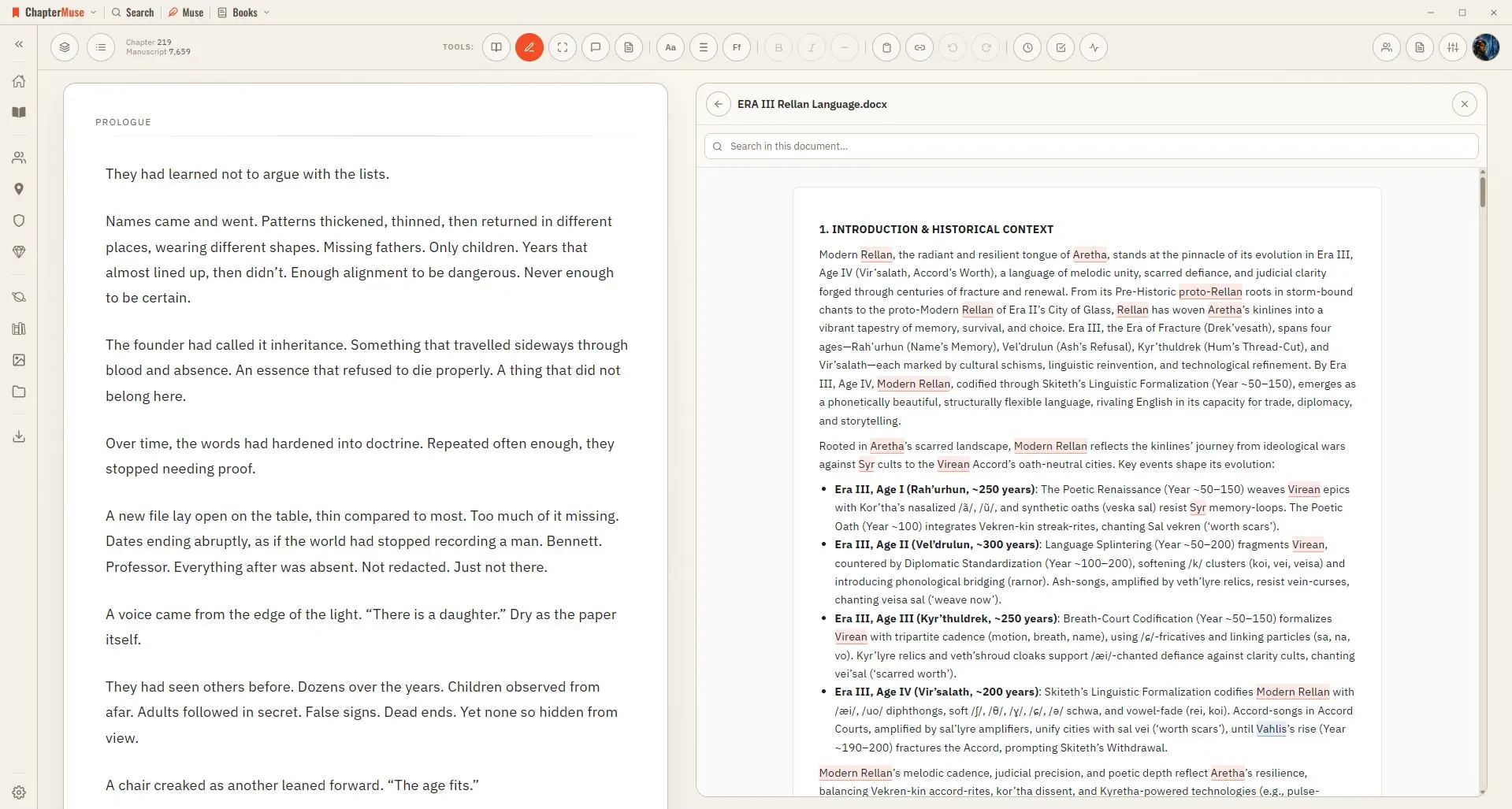
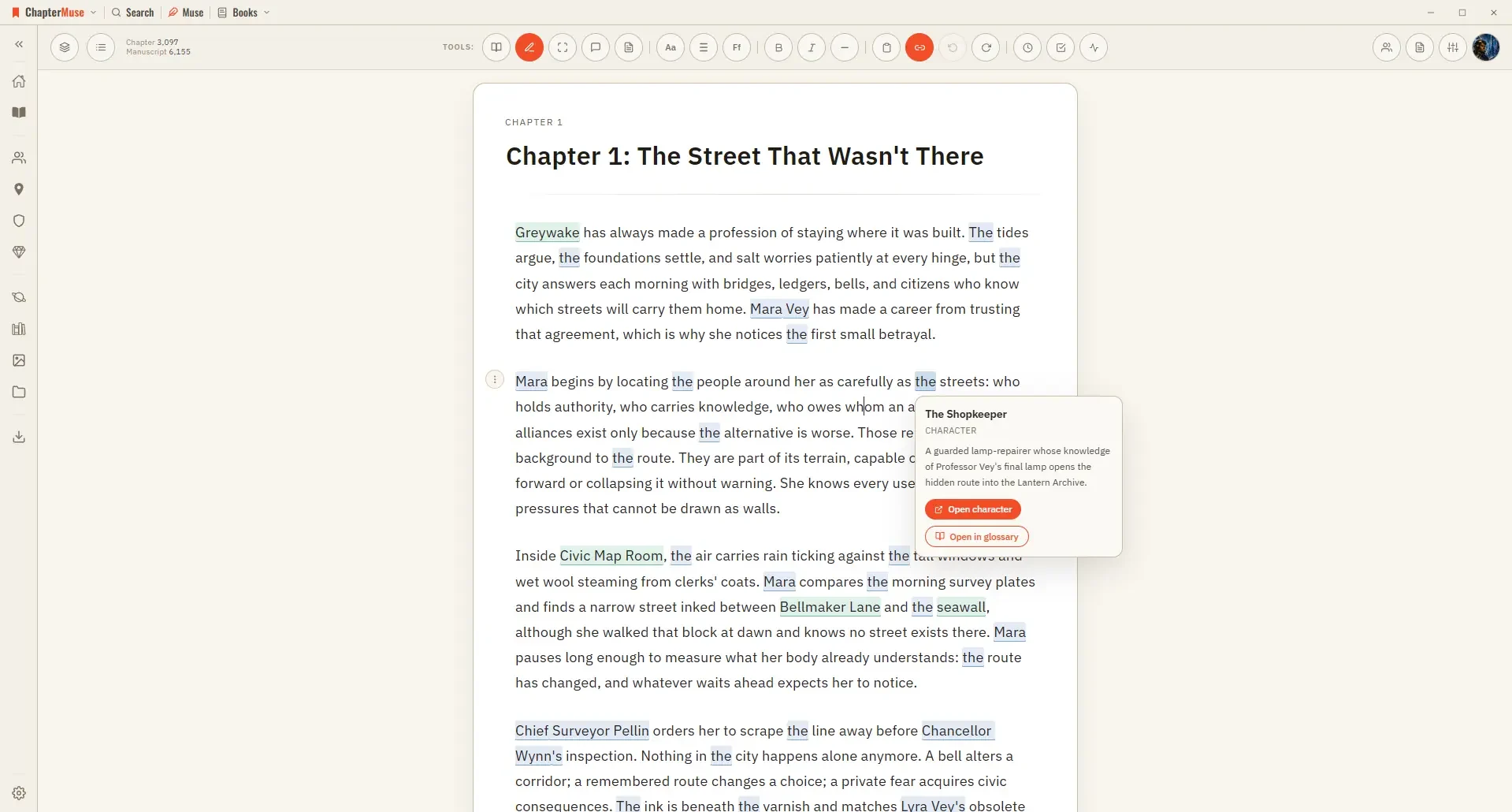
Locations, characters, factions and glossary links connect the research to the story world once, and the prose links back to it, so the household is described where it is decided rather than wherever it happened to come up. Names light up in the manuscript, which means the detail you settled in chapter two is one click away in chapter thirty.
Historical locations
04 · Sources
Use AI as a route back to evidence.
There is a version of AI in historical fiction that should worry you, and it is the one that answers a question about the eighteenth century with great fluency and no provenance. A confident wrong answer about a real period is worse than no answer, because it is the kind of thing that gets printed.
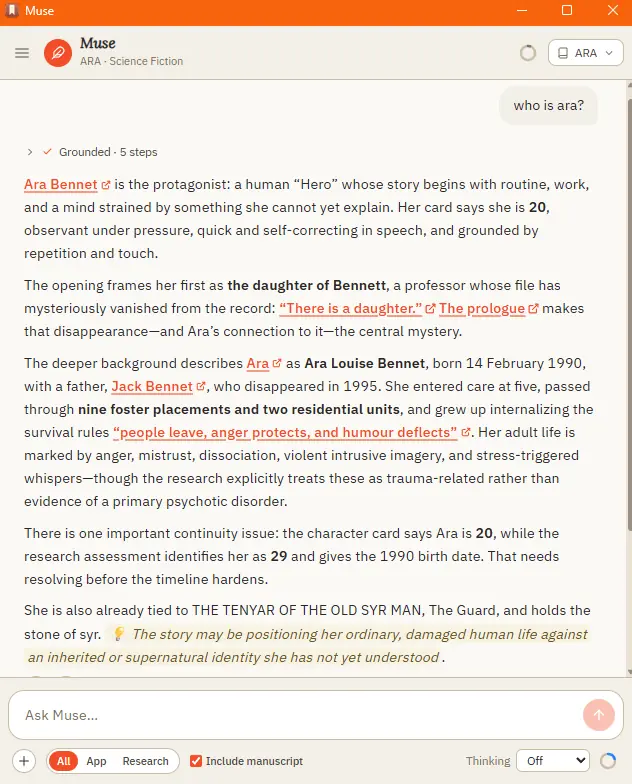
Muse answers from the material selected for the request and shows the citations, so the output is a route back to a source rather than a substitute for one. The source stays there to be read, and the judgement about what it means stays where it belongs. That is a deliberately narrow promise, and it is the only one worth making about history.
Cited research answer
Questions answered
01Can I try this before buying?
Yes. The 30-day trial unlocks the complete application without asking for a payment card.
02Does ChapterMuse work on Windows and macOS?
Yes. ChapterMuse is a desktop application for Windows and macOS, with the manuscript and story-world data stored on your computer.
03Can I keep PDFs and images with the novel?
Yes. The Research Center stores documents, PDFs, spreadsheets, images, audio and links beside the manuscript, on your own machine.
04Does Muse replace checking a historical source?
No. Citations provide a route back to the source; the writer remains responsible for reading it and deciding what it means.
05Which of these need a particular licence?
The Research Center, locations, characters, factions, the glossary and name links are included from Light at £24 including UK VAT. Chronos comes with Writer at £36 including UK VAT. The trial unlocks everything.
