For fantasy writers
One world, kept straight

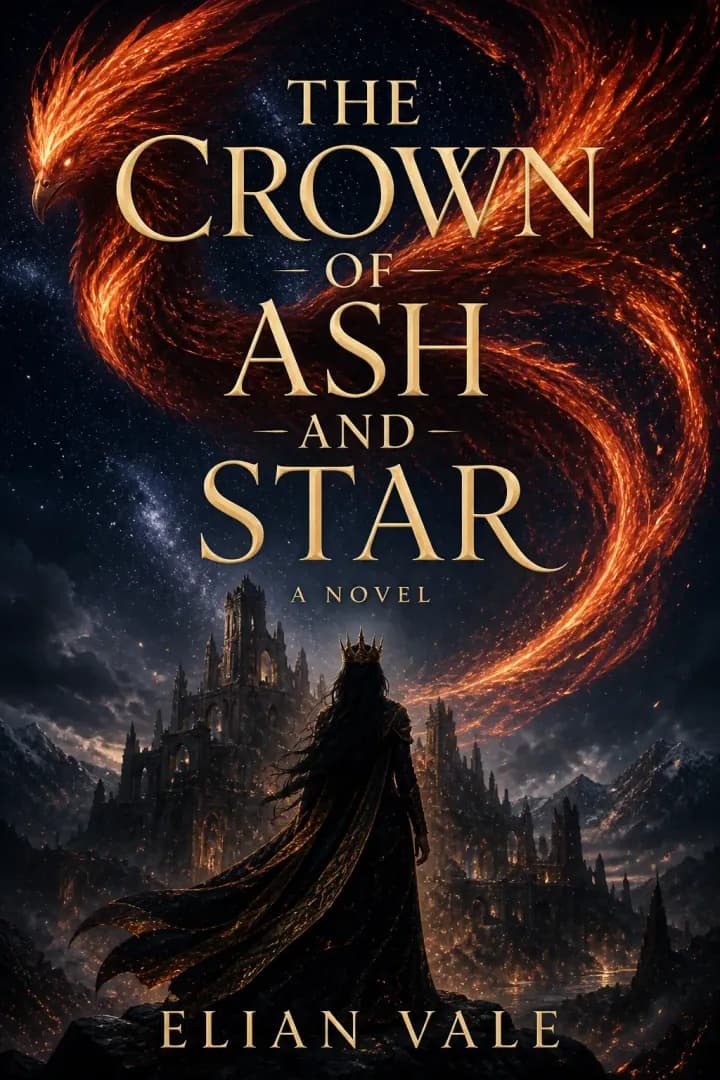
Keep kingdoms, bloodlines, factions, relics and chronology available beside the chapter—then carry every consequence into the next book.
01 · World
Give every power
a place in the same continuity.
The trouble with a large fantasy world is not inventing it. It is that the invention arrives in fragments, over years, in whatever order the story needed it. A house gets a sigil in chapter four, the family that carries it gets a history in chapter nineteen, and the relic in their vault turns up in a note you wrote on a train and have not opened since.
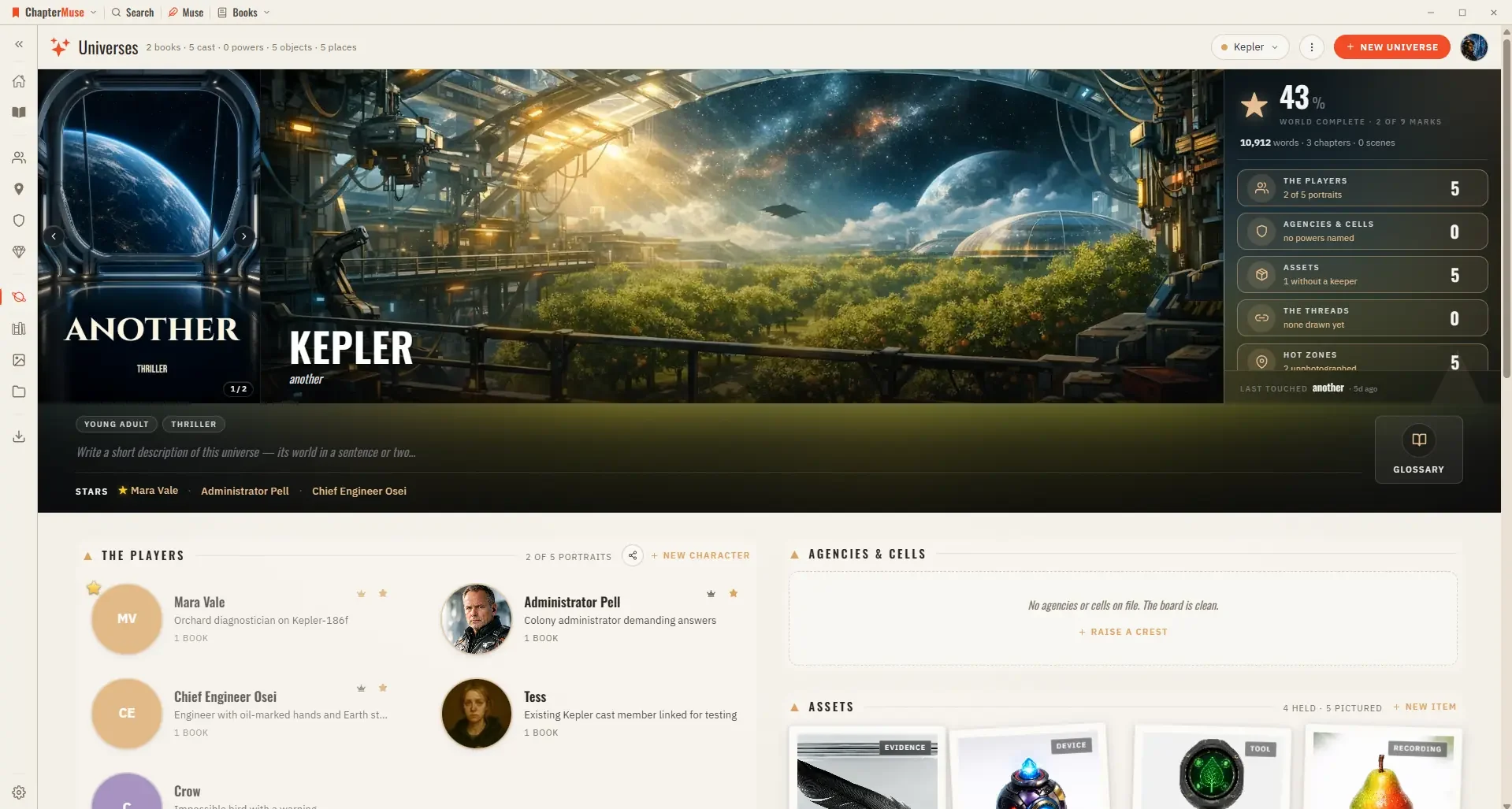
Factions, locations, characters and items here belong to one universe rather than sitting in five disconnected templates. The house, the family, the keep it was granted and the relic in the vault are four records with real links between them, and opening any one shows you the other three. That matters most when a series turns over: book two starts with the kingdom exactly where book one left it, the alliances that broke still broken, and nothing to re-enter from a document written eighteen months ago.
Characters
Keep identity, history, psyche, voice, relationships and arc in one living profile.
Locations
Collect place details, images and the scenes that happen there.
Factions
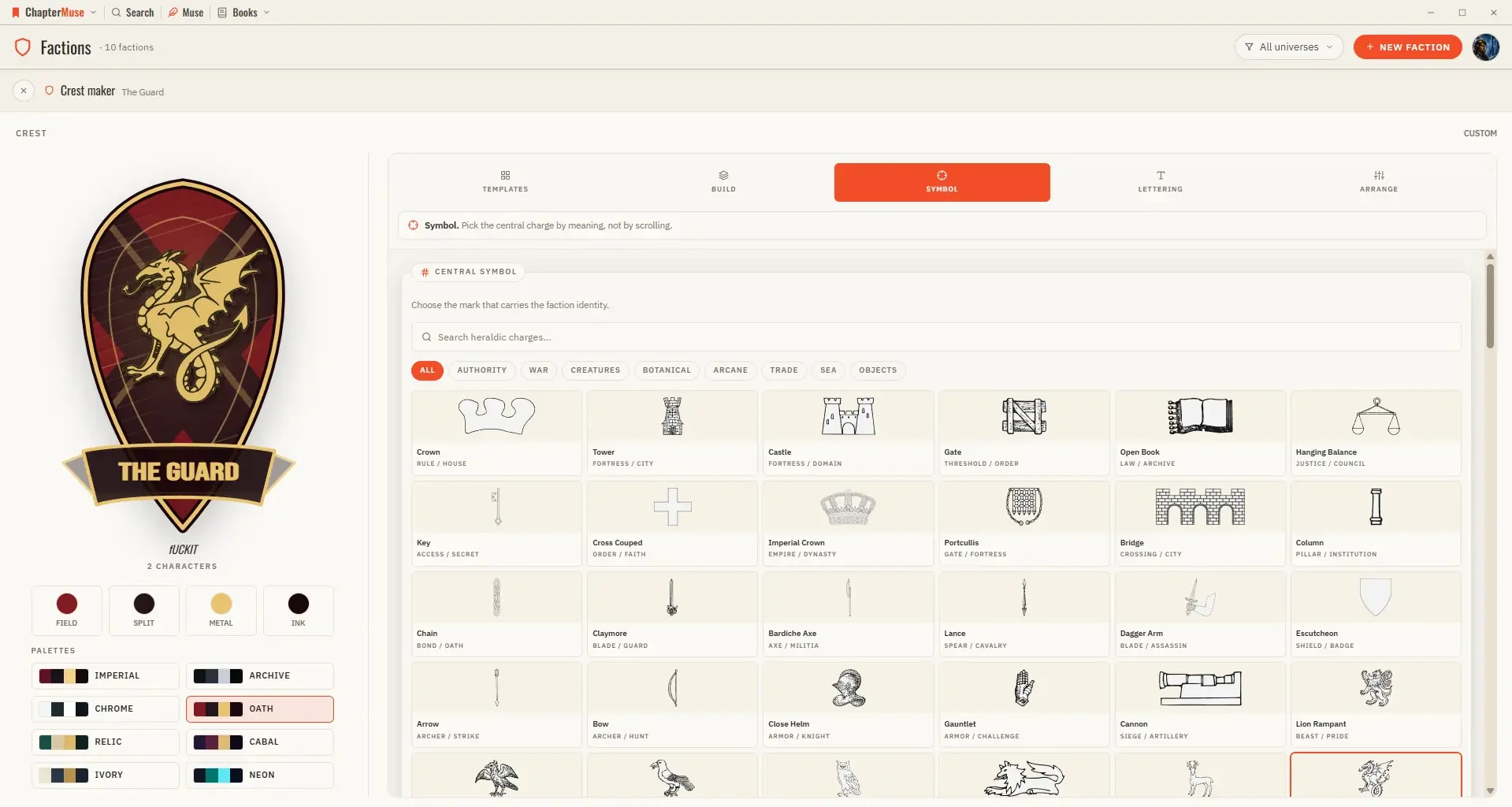
Track membership, purpose, power and visual identity without losing context.
Items
Record what an object is, who holds it and where it matters.
Connections
Make alliances, rivalries, debts and other relationships visible across the cast.
Lore and glossary
Keep established terms and world rules consistent wherever they appear.
Faction crest maker
02 · Story
Track the arc beneath the lore.
Worldbuilding has a failure mode that only shows up at length: the world gets richer and the book stops moving. You can spend a happy fortnight on a succession crisis three hundred years before chapter one, and none of it reaches the reader, because no character in the novel is standing in front of a decision because of it.
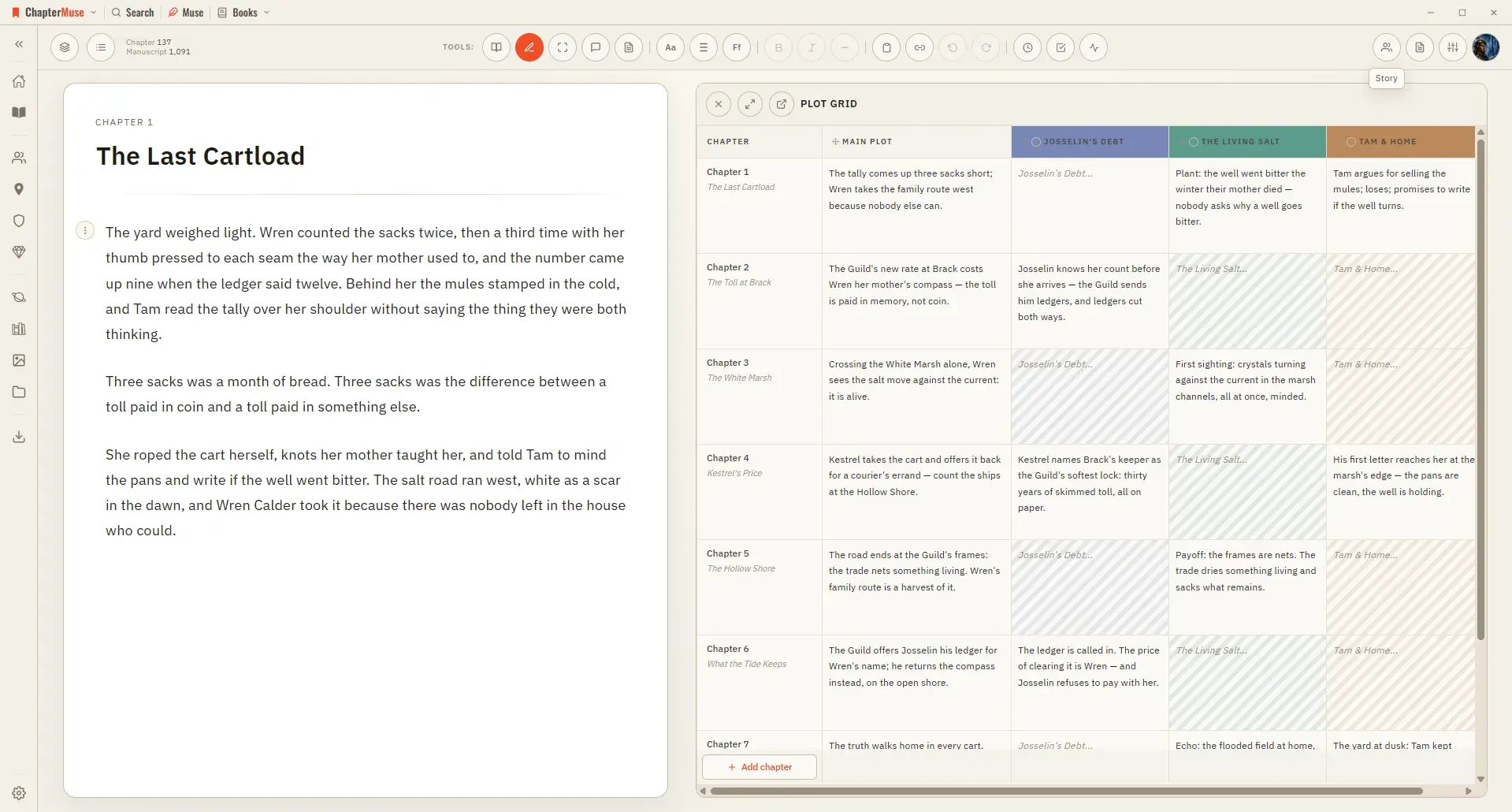
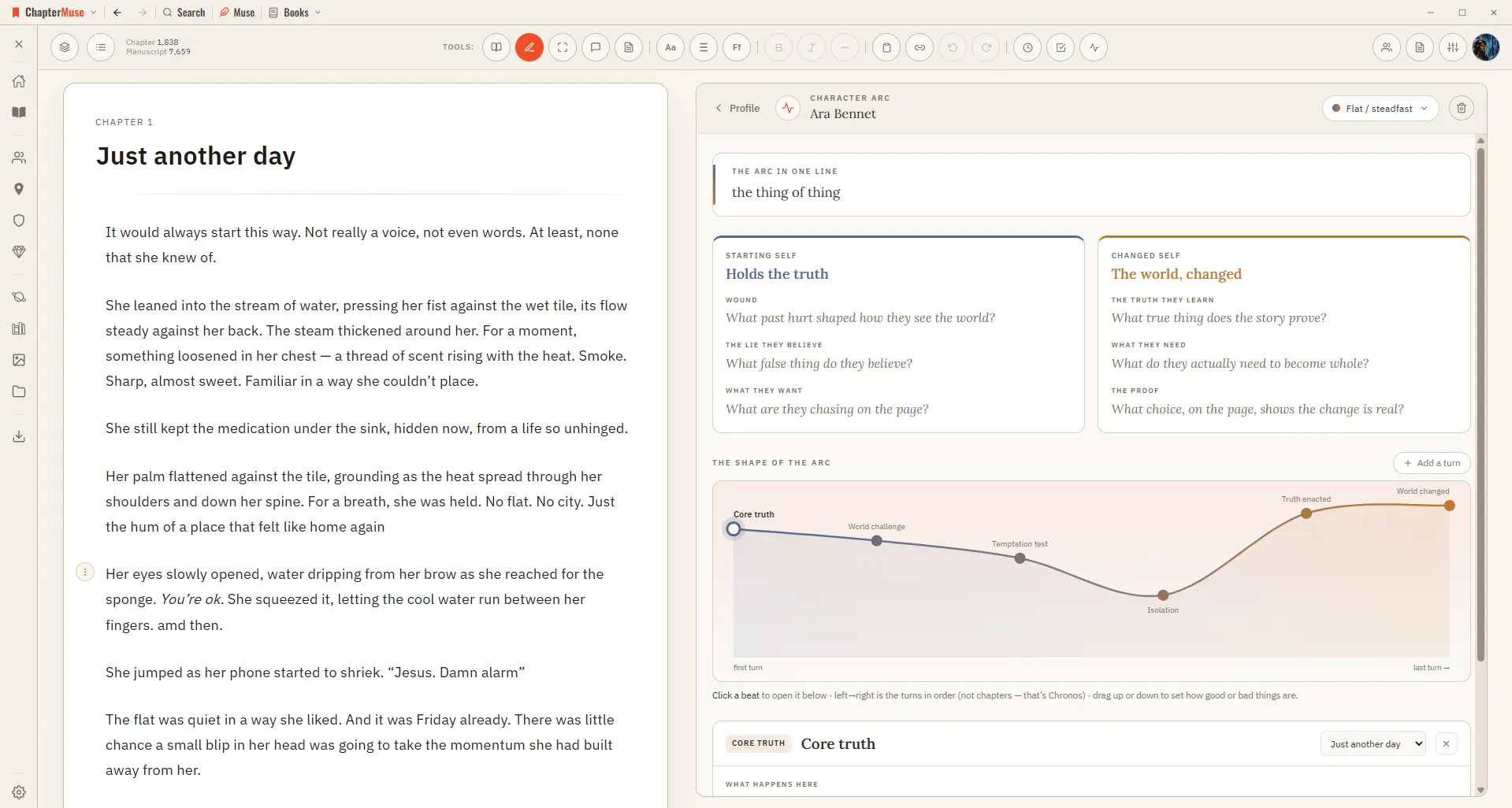
The planning views exist to keep the lore answerable to the story it serves. A Plot Grid puts each thread against the chapters so you can see the nine-chapter stretch where the rebellion quietly stops happening. Chronos places the big turns in story time, which is where the succession crisis either earns its place or reveals itself as something you enjoyed writing. Character Arcs track who is actually changed by any of it.
Plot Grid
Read plots and subplots across the same chapter-by-chapter view. An empty cell is a thread you dropped.
Chronos
Chapters across the top, as wide as their scenes, with plot threads and character arcs running underneath.
Outliner
Arrange chapters and variants while keeping intentions and summaries beside the draft.
Mind Map
Explore uncertain ideas visually before committing them to the book's structure.
Plots and arcs
03 · Memory
Ask where the rule was established.
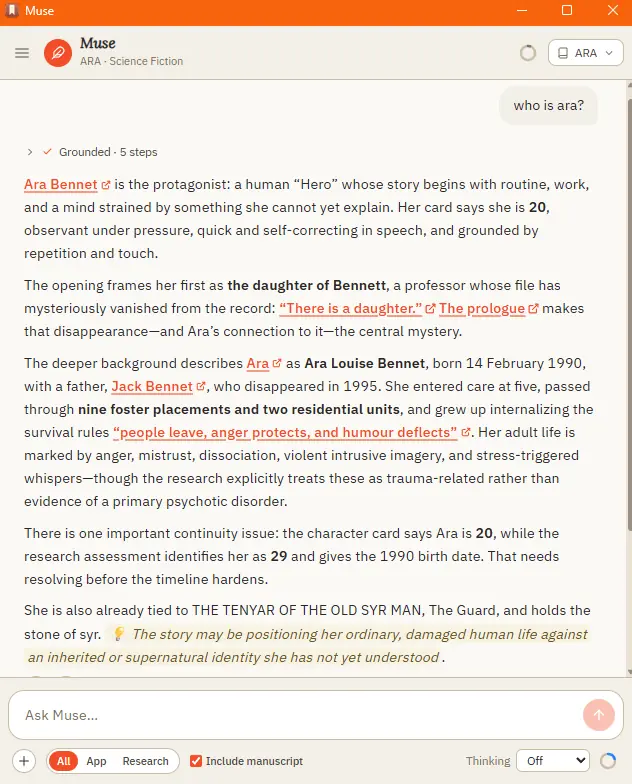
Every fantasy writer knows the specific dread of the half-remembered rule. You wrote, somewhere, that iron does something to the fae. You are now on chapter thirty-one and about to write a scene that depends on it, and you cannot remember whether you established it, implied it, or only ever intended it.
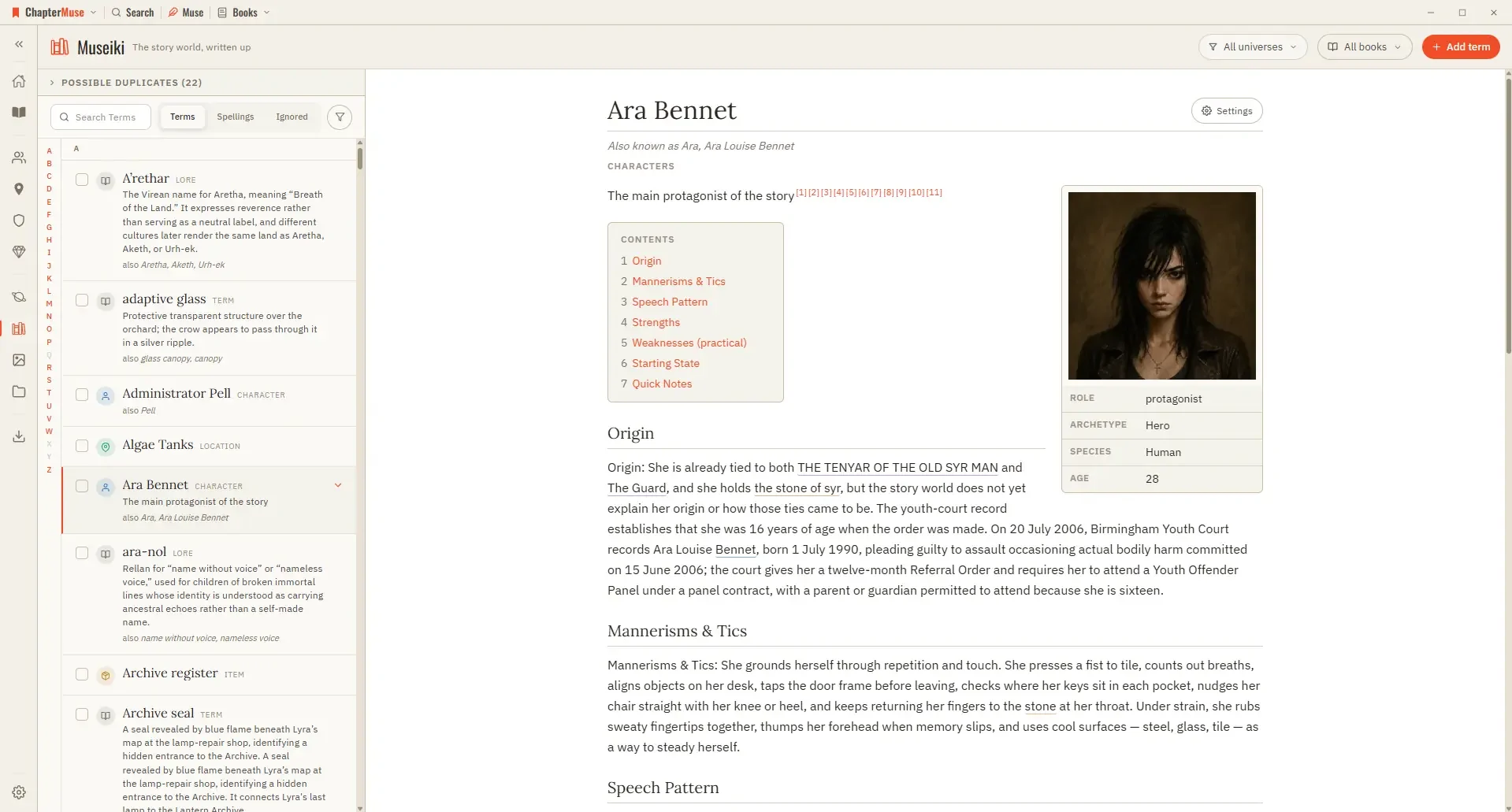
Muse answers that question from your own pages and shows you the paragraph it read, so the answer is checkable rather than merely confident. Museiki renders the same records as a readable encyclopedia, which is a different kind of useful: it is the version you can hand to a co-writer, an editor, or yourself in two years when book three begins and the world has to be true again.
A cited continuity answer
The world as an encyclopedia
Questions answered
01Can I try this before buying?
Yes. The 30-day trial unlocks the complete application without asking for a payment card.
02Does ChapterMuse work on Windows and macOS?
Yes. ChapterMuse is a desktop application for Windows and macOS, with the manuscript and story-world data stored on your computer.
03Can one world contain a series?
Yes. Universes share story-world data across their books, so a character, a faction or a location recorded in book one is already present in book two.
04Can I design faction crests?
Yes. Factions include a heraldic crest maker, which comes with the Writer licence at £36 including UK VAT.
05Which of these need a particular licence?
Characters, locations, factions, items, the Mind Map and the Plot Grid are included from Light at £24 including UK VAT. Chronos, Connections, Character Arcs and the crest maker come with Writer at £36 including UK VAT. Everything is unlocked during the trial, so you can find out which you actually use before choosing.
