For science-fiction writers
Rules that never contradict
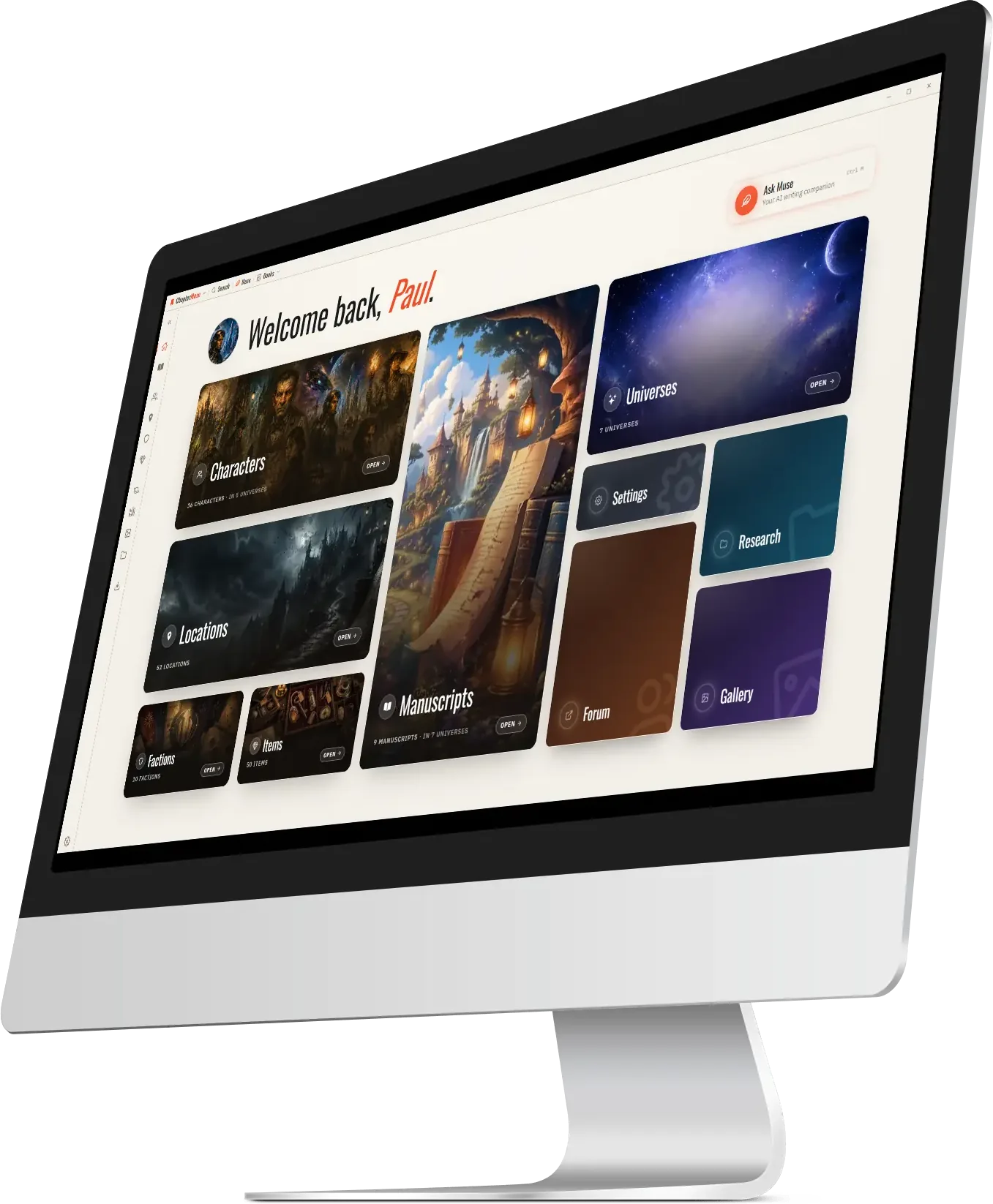
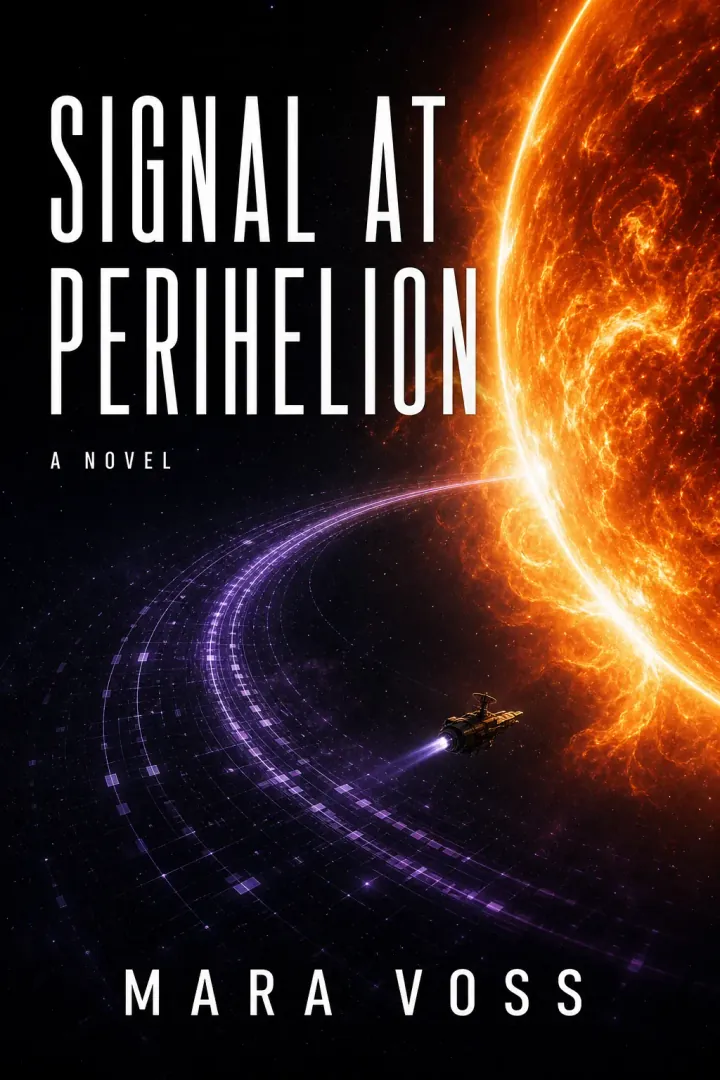
Track the rule, technology, faction and consequence without pausing the chapter to search six separate files.
01 · Systems
Record the rules that make speculation believable.
Science fiction runs on a bargain. The reader will accept a faster-than-light drive, a hive mind or a habitable moon without complaint, and in exchange the book has to be rigorous about what follows from it. Break the physics and nobody minds. Break your own rule about the physics in chapter twenty-two and the whole thing goes slack.
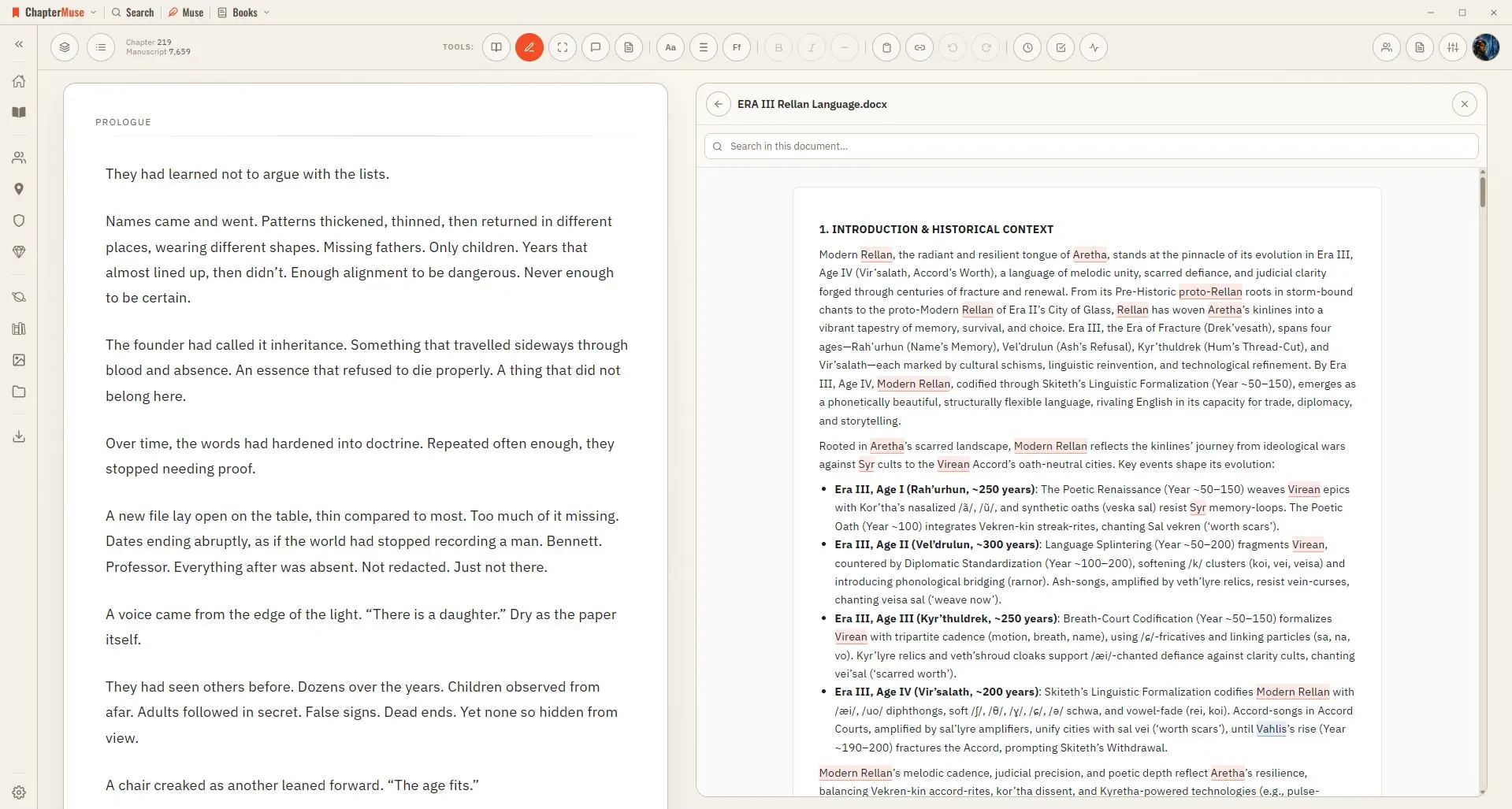
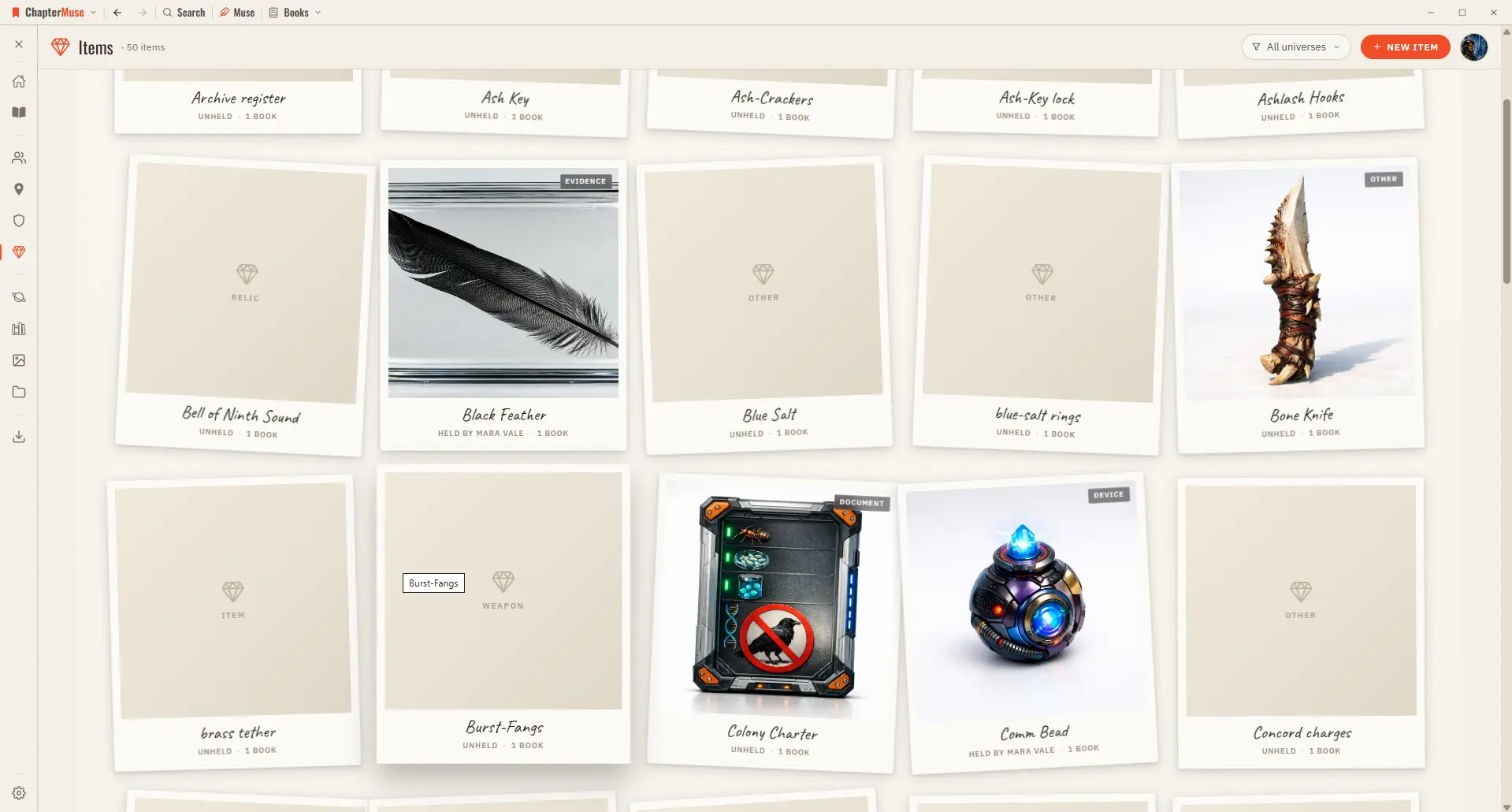
So the system needs somewhere to live that is not your memory. Research holds the sources, the glossary holds the invented terminology and recognises it inside the prose, items hold the technologies and factions hold the people arguing about who controls them. The point is not completeness. It is that the rule you set in chapter three is somewhere you can find it in chapter twenty-two, with the passage that established it attached.
Items
Record what an object is, who holds it and where it matters.
Factions
Track membership, purpose, power and visual identity without losing context.
Lore and glossary
Keep established terms and world rules consistent wherever they appear.
Characters
Keep identity, history, psyche, voice, relationships and arc in one living profile.
Research beside the manuscript
02 · Time
Separate chronology from revelation.
Any book with a reveal is running two sequences at once: the order things happened, and the order the reader finds out. Science fiction runs more of them than most, because it adds the century of backstory that explains why the colony is like this, and often a timeline that loops or forks.
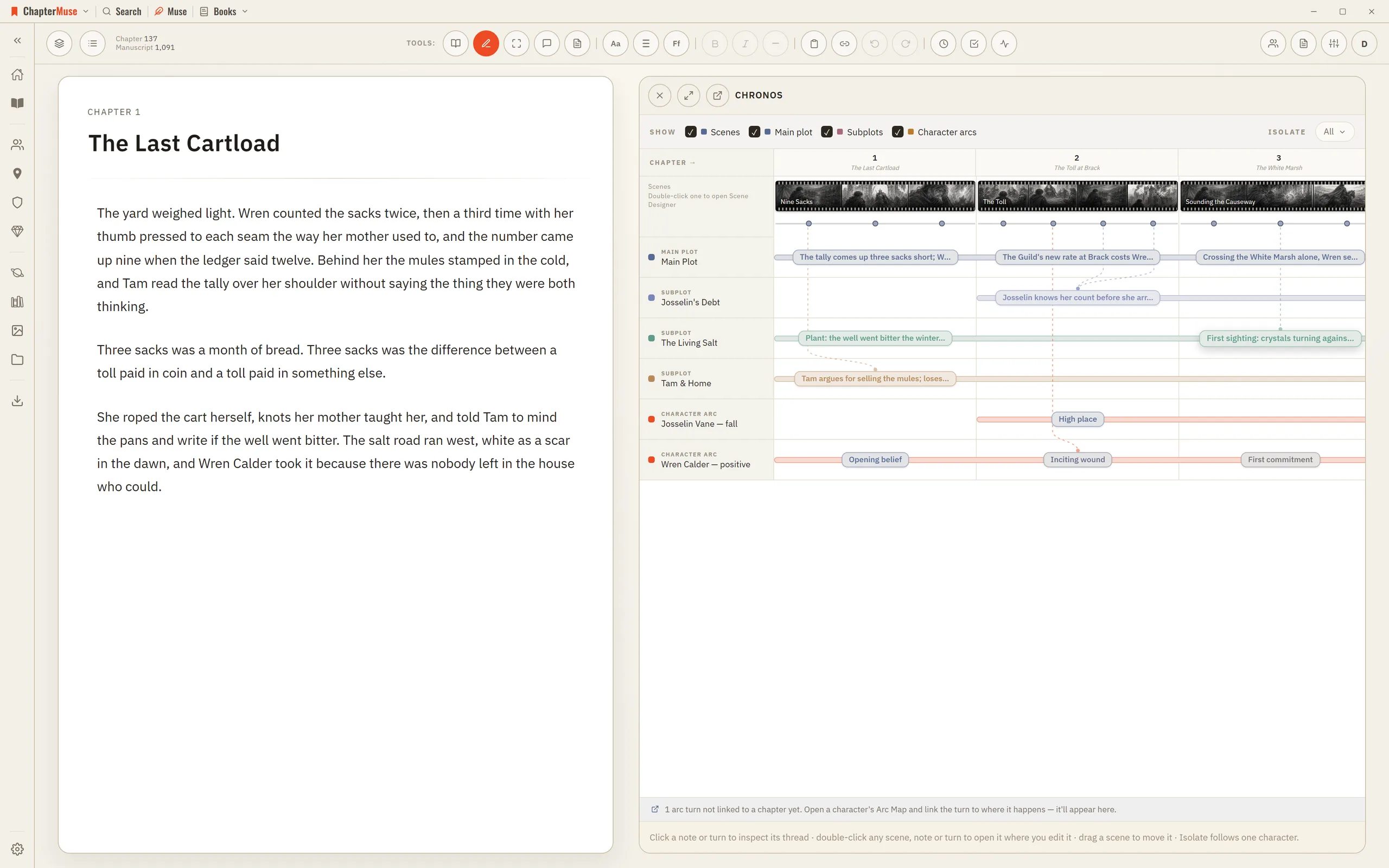
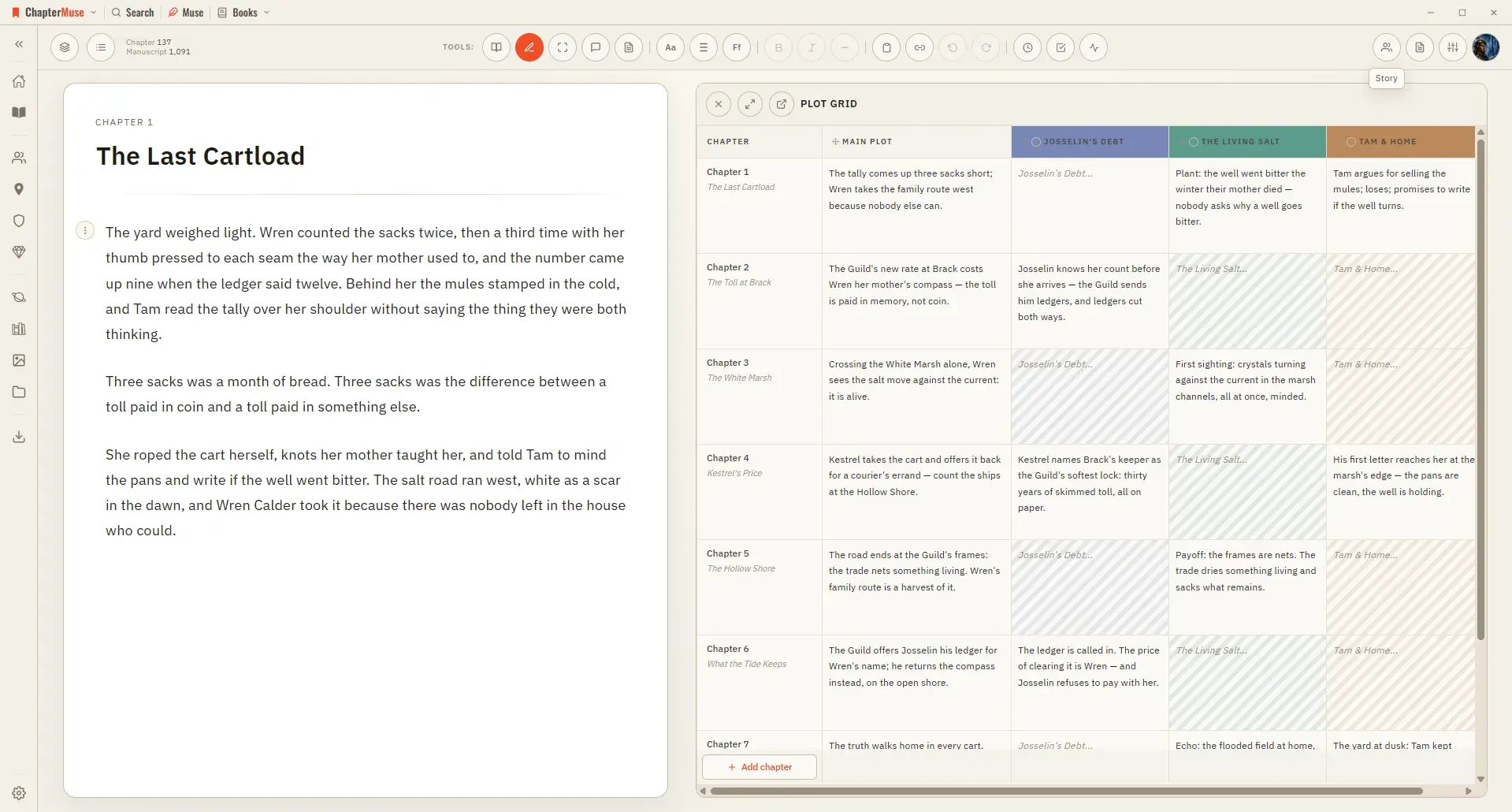
Chronos records when events actually happen. The Plot Grid shows when the reader learns about them. Keeping those apart is what lets you scramble the telling deliberately rather than by accident, and it is the only way to catch the quiet errors: the character who is nineteen in spring and twenty-three by autumn, the journey that takes four days out and an afternoon back.
Chronos
Chapters across the top, as wide as their scenes, with plot threads and character arcs running underneath.
Plot Grid
Read plots and subplots across the same chapter-by-chapter view. An empty cell is a thread you dropped.
Outliner
Arrange chapters and variants while keeping intentions and summaries beside the draft.
Story chronology
03 · Continuity
Ask the universe what it already knows.
The question is almost never "what is my magic system". It is "did I already name this ship", "what did the ambassador say about her homeworld", and "is this the second or third time I have explained the drive".
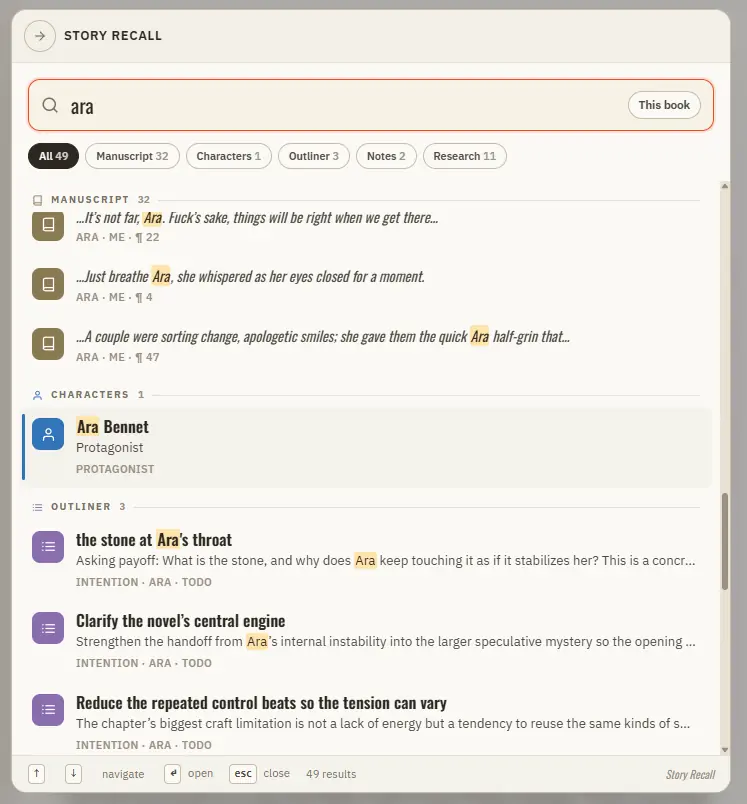
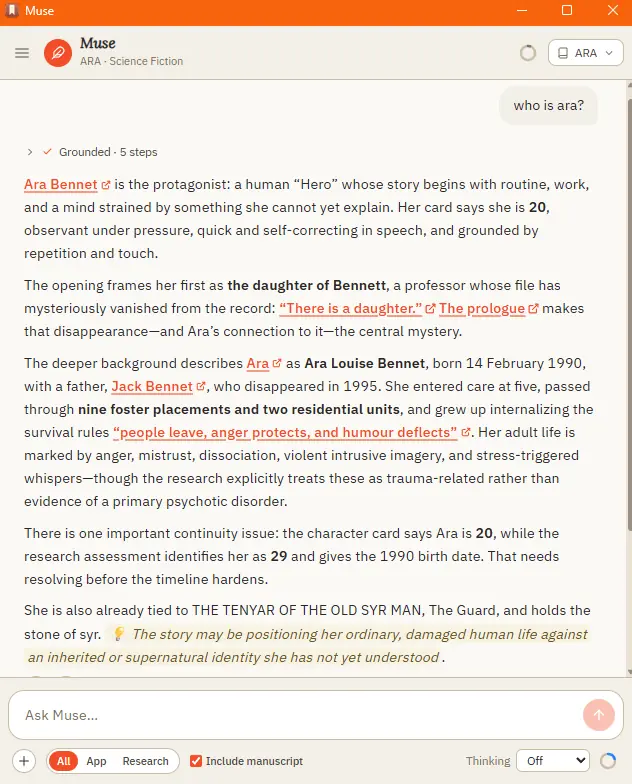
Search and Recall spans the prose, the cast, the scenes, the notes and the research in one pass, which answers most of those in a few seconds. For the ones that need reading rather than finding, Muse answers from the sources you selected and links back to them, so you end up at the paragraph rather than at an assurance.
Search and Recall
Questions answered
01Can I try this before buying?
Yes. The 30-day trial unlocks the complete application without asking for a payment card.
02Does ChapterMuse work on Windows and macOS?
Yes. ChapterMuse is a desktop application for Windows and macOS, with the manuscript and story-world data stored on your computer.
03Can I track invented terminology?
Yes. Glossary and name links recognise story-world terms inside the prose, so an invented word is one click from what you decided it means.
04Which of these need a particular licence?
Research, the glossary, items, factions, characters and the Plot Grid are included from Light at £24 including UK VAT. Chronos comes with Writer at £36 including UK VAT. The trial unlocks everything.
